
 РУССКИЙ
 11:53 29.05.2026 •
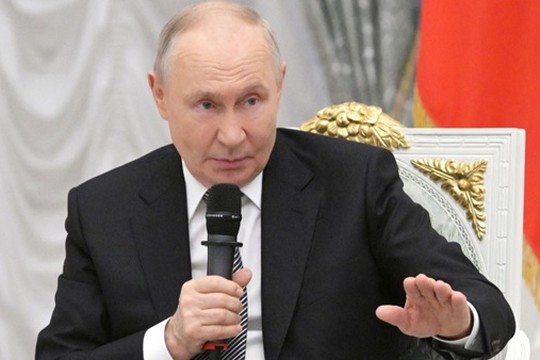
For the past three years, the official European line has been to isolate Russia politically, economically and diplomatically. Talking to Vladimir Putin was not only considered useless; in many Brussels circles it became almost a form of political betrayal of Ukraine, writes The European Conservative.
That is starting to change.
Not in a coordinated way yet, but in an increasingly visible manner. The question is no longer whether Europe should maintain contacts with Moscow, but when, how, and under what conditions it will do so again. What barely a year ago was a political taboo is today already being discussed in ministerial meetings, foreign ministries and EU offices.
The clearest signal came this week from several simultaneous fronts. Italian Prime Minister Giorgia Meloni has defended the idea of creating a special European envoy to talk with Russia. Emmanuel Macron confirmed that “technical” work is underway to restore channels of dialogue. And Bulgarian President Rumen Radev went even further from Paris by calling for a “change” in European policy toward Ukraine and asking the EU to “finally agree to begin negotiations with Russia.”
The pressure is beginning to build because the strategic reality has also changed.
Europe watches as the United States once again monopolises any serious attempt at negotiation, while the EU, which finances a large share of Ukraine’s economic and military effort, risks being left out of a potential post-war security architecture. That fear resurfaced after the Alaska meeting between Donald Trump and Vladimir Putin, where both attempted to explore a possible stabilisation framework for European security.
And there lies one of the least publicly discussed yet most present elements in diplomatic and energy circles: the possibility that Europe may end up partially recovering Russian energy supplies, albeit under new conditions and probably with American intermediation.
Several analysts and diplomatic sources already acknowledge that one of the hypotheses circulating in informal conversations involves allowing a certain controlled return of Russian gas to the European market, but integrated within a new scheme supervised or conditioned by Washington. Europe would need cheap energy; the United States wants to maintain strategic control capacity over the continent. The balance is beginning to look less ideological and more transactional.
The EU, however, remains deeply divided. And that lack of decisiveness is pushing it ever closer to irrelevance.
The High Representative for Foreign Policy, Kaja Kallas, is trying to contain the shift. This Thursday she described the debate over a possible European envoy for Ukraine and Russia as a “trap.” According to her argument, Moscow is using the debate to divide Europeans internally and to select interlocutors more favourable to its interests…
Kallas’s reaction reflects something deeper: the clash between two strategic visions within the EU.
Behind the constant moral arguments lies a harsh economic reality. European industry continues to pay structurally higher energy costs than its American or Asian competitors. Germany has still not fully resolved the industrial impact stemming from the Russian energy cut-off. And several European governments are beginning to detect social and budgetary fatigue regarding the Ukrainian conflict. And the debate over Russia is no longer solely about Ukraine, but about Europe’s real role in the new international balance of power.
The great unknown is whether Brussels will be able to open a political channel with Moscow on its own initiative or whether it will first need Washington’s approval. And that is precisely one of the conclusions many draw from Alaska: Europe keeps talking about strategic sovereignty while waiting for others to define the framework for continental negotiations.
The problem for Brussels is that time is working against it. The further any bilateral format between Washington and Moscow advances, the smaller Europe’s margin to influence the final outcome will be.
read more in our Telegram-channel https://t.me/The_International_Affairs

















