
 РУССКИЙ
 11:30 04.05.2026 •
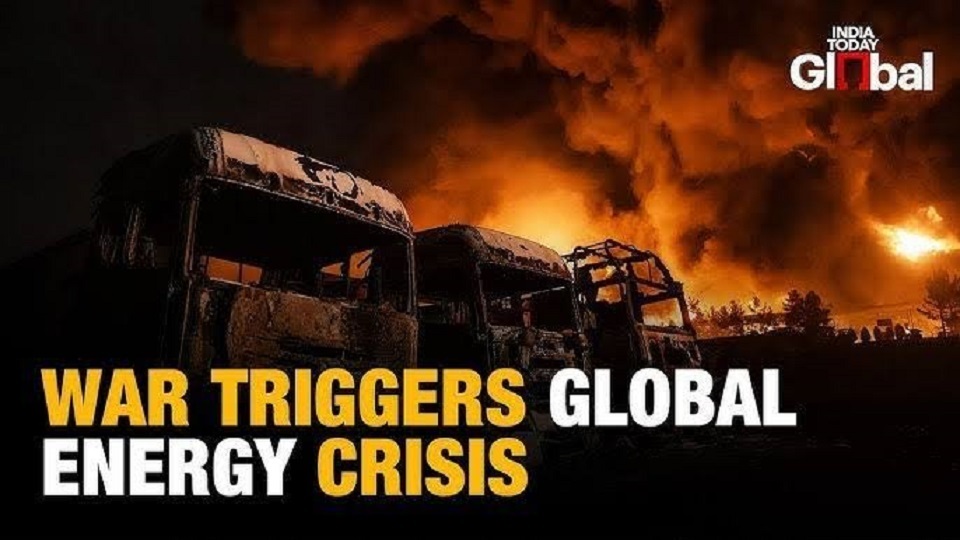
Washington did not intend to strengthen Russia when it launched its campaign against Tehran. But that is exactly what is happening. And the longer this conflict drags on, the more the global energy crisis is exacerbated. Russia’s war chest will only accelerate in its rate of replenishment — not despite U.S. policy, but because of it, ‘The Hill’ stresses.
With now roughly one-fifth of global energy flows removed due to the closure of Hormuz, the world has seen the effects firsthand. Tanker traffic has ground to a halt. Insurance costs have surged.
The U.S. has not seen extreme impacts, but countries across Asia and Oceania now face increasingly tightening supply conditions with fewer viable alternatives. Energy demand did not simply vanish when Hormuz shut down. That shift is where the policy failure begins to show.
The closure of Hormuz is not a short-term disruption that resolves with a tweet or a Truth Social post
In response to rising prices and increasing political pressure, Washington quickly introduced a flurry of waivers of sanctions tied to Russian energy. Several general licenses authorizing the sale of Russian crude oil were meant to temper rapidly rising energy markets. They failed.
Prior to the conflict, Russian Urals crude oil traded at a notable discount to Brent crude oil. Sanctions pressure forced Moscow to sell below market price to maintain volume. That constraint has now been eliminated. Now, Russian barrels are trading at parity or even at a substantial premium to Brent. Even the most conservative estimates point to a multi-billion-dollar windfall now tied directly to the combination of sanctions easing and a supply-constrained market.
The closure of Hormuz is not a short-term disruption that resolves with a tweet or a Truth Social post. Mine clearing operations take time. Security guarantees take longer. Even under ideal conditions, restoring normal tanker flow requires weeks of sustained stability and safety assurances, followed by a clearing of the bottleneck and finally, transit timelines that extend supply recovery even further.
Now, restricting Russian energy risks compounding an already fragile supply situation
Asia and Oceania do not have that kind of time. Gulf Cooperation Council countries cannot fully compensate when one of the world’s main transit corridors is constrained. Demand destruction is not a quick fix when it translates into blackouts, industrial shutdowns and economic contraction across multiple countries.
Which leaves one remaining pressure valve large enough to stave off this crisis: Russian energy. For almost five years now, the West’s sanctions policy has been built on the assumption that restricting Russian energy exports would weaken Moscow. That assumption no longer holds in the current environment. Now, restricting Russian energy risks compounding an already fragile supply situation.
That is the reality Washington is now faced with. Continue with the current approach, and energy shortages deepen across Asia and Oceania. Expand sanctions relief, and Russia benefits financially in ways that unwind years of work from the West.
That is not an accident. It is the result of a strategy that failed to fully account for a prolonged conflict. Operation Economic Fury was designed on a flawed premise intended to force an expeditious diplomatic resolution through economic strain. But the rest of the world does not have the time to play a waiting game with unknown timelines.
Washington did not just fail to force Tehran to capitulate, it created the conditions under which Russia can thrive.
These are the costs of poor planning, poor execution and playing a waiting game with a regime that has planned for this for 47 years. The problem is not just a prolonged conflict or a disrupted market, but an outcome that runs completely undermines our long-term objectives.
read more in our Telegram-channel https://t.me/The_International_Affairs

















