
 РУССКИЙ
 11:41 07.05.2026 •
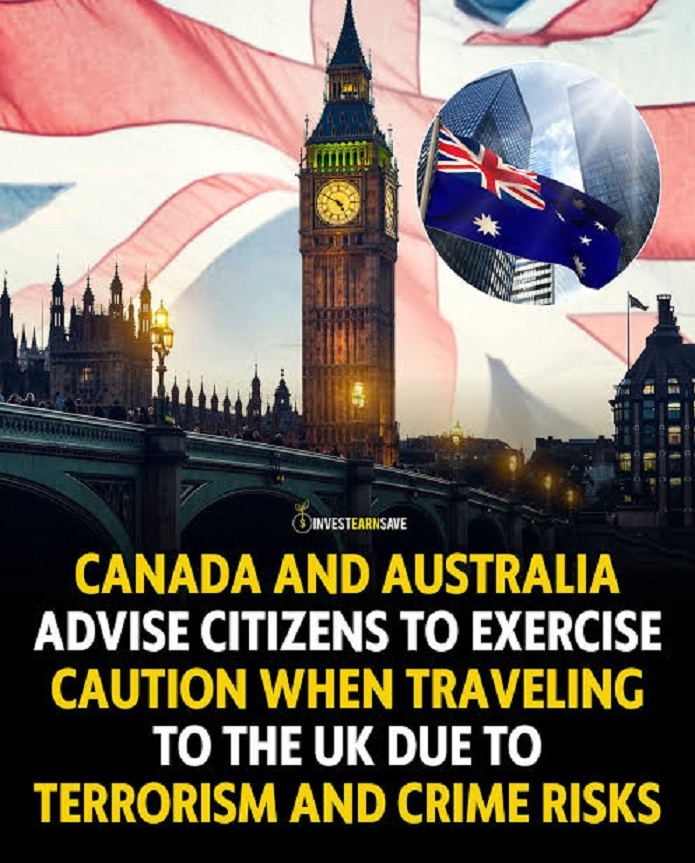
Britain faces the acute problem of a full-scale Islamist insurgency, writes ‘The Spectator’. It's a serious problem, but the government isn't addressing it. Failure would be more than just another crisis; it would put the country's very existence at stake.
The recent horrific attack in Golders Green has generated much anger and despair at this latest in a series of concerted, violent assaults currently aimed primarily at the Jewish community, but with a clear lineage to earlier Islamist outrages. The UK terrorism threat level was raised to ‘severe’ following the attack on Thursday. But terrorism, ‘…an action or threat designed to influence the government or intimidate the public’, is an inadequate descriptor of what we face. We face a different problem: a full-blown insurgency.
From organised ‘Globalise the Intifada’ hate marches, terror attacks and online trolling, through to the deplatforming of ‘heterodox’ speakers, we are facing what seems to be almost a dictionary definition of an insurgency. And it has not been unsuccessful politically: the government’s recognition of Palestinian statehood, judicial tolerance of attacks on supposedly Israeli-linked firms, the unwillingness of the government to join or even support the US and Israeli assault on the Iranian terror regime, the promotion of Islamophobia definitions – all could be attributed to the ‘success’ of the insurgency and the electoral calculus of a Labour government that can see the Muslim vote, hitherto one of its two pillars of support (the other being public sector workers), slipping through its fingers.
The government would, of course, resist this analysis. On all the political ‘successes’ above, it would argue that they stand and fall on their own merits. In terms of counter-terrorism, it would point to the Prevent programme, itself part of the wider CONTEST strategy and Counter-Terrorism Command (CTC).
According to its website, CTC currently has 800 live investigations involving thousands of potential suspects, with the largest single focus being ‘Islamist extremist terrorism’. It is also responsible for countering state-sponsored criminality in the UK and investigating war crimes: an impossibly large portfolio. Leaving those aside, between supporting an ‘at risk’ individual and going after a nascent or actual terrorist plotter, there is a gap currently unfilled; meeting that gap is the difference between a counter-terrorism and counter-insurgency campaign, and why we need to pursue the latter.
Recognising the problem for what it really is would make a difference, but the consequences of such a recognition would be uncomfortable. Key to any successful counter-insurgency campaign is separating the insurgents from the milieu in which they operate. This is a ‘whole of society’, ‘whole of state’ endeavour; a ‘hearts and minds’ struggle for the support of our Muslim fellow citizens. As an aside, the attempt to impose an Islamophobia definition would, perhaps counter-intuitively for a ‘hearts and minds’ struggle, be a massive misstep in the wrong direction.
Dr David Kilcullen, the world’s leading authority on modern counter-insurgency, would point to two other essentials. The first is control: someone must own the problem.
The second element is owning the information space. If we own it, we can counter the ideology of hate, deny sanctuary to the haters and, more positively, provide an alternative motivation to the siren calls of a Jew- and Christian-hating death cult.
In the last year, the Emiratis have restricted state-funded scholarships for students wishing to study at UK universities because of the extent of Islamic radicalisation and extremism found here; our Jewish community has never felt so threatened. We have, it should be clear to all, a major problem that we are not addressing: a failure would not just be another crisis; it would be existential to our survival as a liberal democracy.
read more in our Telegram-channel https://t.me/The_International_Affairs

















