
 РУССКИЙ
 12:16 02.06.2026 •
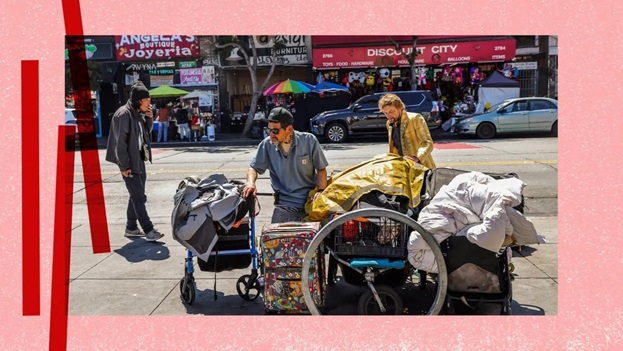
Life in America has become frustratingly, dauntingly expensive. And voters are feeling the pinch, writes The I Paper.
Consumer prices are nearly 23 per cent higher than they were five years ago, according to the Bureau of Labor Statistics. The impact on consumer confidence is grim.
May’s Gallup economic confidence index found Americans at their most pessimistic since 2022 – 49 per cent of Americans said economic conditions were poor, with 34 per cent rating the economy as fair. Just 16 per cent of Americans rate current economic conditions as excellent or good. None of this bodes well for Donald Trump and his Republican Party in November’s midterm elections.
A US President elected to tackle inflation and high prices has only driven costs higher, with his tariffs on imported goods and an unpopular war with Iran which has closed the Strait of Hormuz sending oil prices and fertiliser costs soaring. But that’s only part of the problem.
“I can’t afford my life,” our neighbourhood handyman told me recently. A common sentiment here in wildly expensive New York City. He explained how the cost of insuring his home has skyrocketed – as insurance companies push up premiums all round, to cover the payouts they’ve made following recent devastating wildfires in California and hurricanes in Florida. As climate change brings unstable weather, insurance costs for everyone are shooting up, not just those living in flood zones or in the path of fires.
The cost of the neighbourhood handyman’s health insurance has increased too. He has a very high deductible, meaning he has to pay the first $10,000 of any healthcare costs – just to keep the overall premium low. Policies like that end up costing you either way, though they are designed to protect you from extreme financial losses. I had my hip replaced last year – for which the insurance company was billed $75,000 by the hospital. Luckily, I have decent insurance and only paid $1,000. A normal delivery of a healthy baby costs at least $15,000 – an emergency C-section would be upwards of $30,000.
Trump has ended the subsidies for Obamacare, leading to an increase in premiums for millions of Americans. Meanwhile, the average monthly rent in Manhattan is $4,730 – $3,100 in the Bronx – a gallon of milk at my corner store is $10 (yes, I should walk the quarter mile to Trader Joe’s where it’s far less) and gas prices in New York are averaging $4.50 a gallon, up from $2.88 before the Iran war.
Insurance, healthcare, rent, grocery prices – with costs rising everywhere, it’s no wonder people are struggling to stay afloat – even choosing not to renew their home or health insurance because they simply can’t afford the premiums. Imagine just hoping for the best, banking on staying healthy or avoiding the impact of bad weather on your home, because you don’t have enough money to insure yourself or your house. It’s a grim choice.
Prices shot up during the pandemic, as massive demand from consumers stuck at home collided with overwhelmed supply chains and shortages of materials. And those prices have never returned to pre-pandemic levels. Which is why so many of us feel fed up. Eating out is more expensive, as tariffs push up the cost of imported goods, inflation makes basic costs higher and now rising fuels costs push up the cost of transporting goods.
Restaurants here in New York City must pay workers an increased minimum wage and cover increased healthcare costs. The Trump administration’s immigration crackdown may also be pushing up costs, by reducing the supply of labour. I recently paid $28 dollars for a plate of pasta which cost $16 when the restaurant opened in 2012. And eating out is a luxury in a city where 25 per cent of residents (nearly 2.2 million people) live in poverty – that’s nearly double the national average.
New York City Mayor Zohran Mamdani campaigned on making the city more affordable for voters – a message which propelled him to victory last year. The city’s overall population declined in 2025 – NYC lost 114,000 people to other cities. And contrary to popular belief, more New Yorkers with incomes in the bottom 40 per cent left than residents with incomes in the top 40 per cent. The Citizens Budget Commission found “the loss of working and middle-class residents likely reflects the high cost of living and perhaps the quality of services, including schools… high taxes may also be a factor, especially for high-income households”.
Mayor Mamdani is trying to bring down the cost of living for New Yorkers by piloting a programme for city-run supermarkets, enforcing a rent freeze on nearly one million rent-stabilised apartments, and building affordable homes over the next decade.
Yet, a swift backlash followed Mamdani’s decision to single out billionaire financier Ken Griffin’s $238m dollar penthouse as an example of a “fundamentally unfair system” which allows the city’s wealthiest to store their wealth in homes which sit empty most of the time. Griffin retorted that New York “doesn’t welcome success” under Mamdani. New York’s Governor, Kathy Hochul, is proposing a so-called pied-à-terre tax on second homes worth more than $5m.
Still, while here in New York the gap between the mega-rich and the rest is a yawning chasm, economic growth in the US over the past quarter-century has far outpaced that in Europe and Japan. America is still – at least in theory – the land of opportunity. Yet, as the Wall Street Journal has reported, the top 10 per cent of earners – that’s households earning $250,000 or more – now account for a whopping 49.7 per cent of all spending. In fact, the top 40 per cent of earners account for more than 75 per cent of all spending. The wealthy are powering the American economy. And if the top 10 per cent are the marquee spenders, it explains why even the upper middle classes are feeling stretched.
This is why Americans feel so discontented. Add in the existential threat of AI taking many white-collar jobs and decimating the graduate job market, when students have taken out hefty loans to cover tuition costs, and you can understand the sense of stress.
Many are now simply leaving the most expensive parts of the country and heading to places where costs are lower. States like Tennessee, Mississippi, Arkansas and Oklahoma have lower property taxes and cost of living indexes than New York and California. The formerly industrial Midwest is seeing people return, in search of a good deal.
What does this feeling of suffocation and inability to pay the bills mean politically? It’s the ten million-dollar question. Former president Biden liked to tell Americans that real wages were rising and American workers were better off than their G7 counterparts. Voters did not like being told they were better off than they felt, and responded by re-electing Trump, who promised: “Starting on day one, we will end inflation and make America affordable again, to bring down the prices of all goods.”
In a December 2024 interview, Trump said: “I won on the border, and I won on groceries … when you buy apples, when you buy bacon, when you buy eggs, they would double and triple the prices over a short period of time, and I won an election based on that.”
If he’s right that grocery prices are the prime determinant of voter behaviour, Republicans could lose the House of Representatives and even conceivably the Senate in November. Bacon, a staple food for Americans who love to cook it with eggs for breakfast, was an average of $6.83 per pound in April – 0.4 of a per cent higher than the month before. Democrats are busily blaming Trump’s tariffs and the war with Iran for driving up prices at the pump and in the grocery store.
The Trump family’s embrace of cryptocurrency and meme coins and the subsequent increase in their net worth is also a bad look. The perception that the Trumps are cashing in while Americans tighten their belts is not a helpful one for Republicans.
Our neighbourhood handyman is a classic swing voter. He believed that Biden pushed up prices, and Trump would lower them. It hasn’t worked out that way. In November, he and millions of other Americans will have their say. As the veteran Democratic political strategist James Carville said in 1992, during Bill Clinton’s successful White House run: “It’s the economy, stupid.”
read more in our Telegram-channel https://t.me/The_International_Affairs

















