
 РУССКИЙ
 13:10 01.06.2026 •
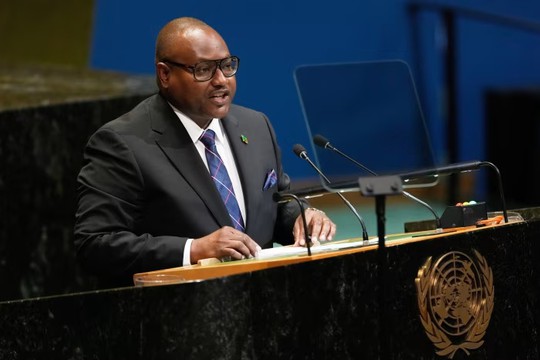
A handful of African nations are rejecting American health aid, outraged by the Trump administration’s demands for access to private health records and even minerals in exchange for lifesaving medicine, writes The Wall Street Journal.
A year after President Trump reversed decades of American policy toward poor countries and closed the U.S. Agency for International Development, some African governments are bridling at the conditions he has set for resuming funding to combat AIDS, tuberculosis and malaria.
Nearly two dozen sub-Saharan countries have assented to Trump’s demands and struck deals with the U.S., including a $900 million, five-year pact with the Democratic Republic of Congo, which is currently the epicenter of a deadly Ebola outbreak. The Congo agreement came a couple of months after the country sealed a minerals deal with the U.S.
But Zimbabwe, Ghana and Zambia have said no or dragged out negotiations over the Trump administration’s self-described America First foreign-assistance policies, which aim to tie health aid more directly to U.S. diplomatic and security goals.
Talks with Zambia have stalled as the nation challenged Trump’s terms for a $2 billion American aid offer, calling U.S. demands for a critical-minerals deal, preferential treatment for U.S. companies and access to private health data unacceptable.
“Zambia has a duty to protect its people’s interests, just as the U.S. protects its citizens, and the negotiations reflect this reality,” Zambian Foreign Minister Mulambo Haimbe said earlier this month.
Haimbe’s comments came after the then-U.S. ambassador in Lusaka, Michael Gonzales, accused Zambian officials of being corrupt and nonresponsive to American overtures. In a speech before departing his post, Gonzales alleged that authorities in the southern African country were “letting the United States pay for healthcare while officials diverted government funds to their own pockets.”
In a letter in April, three Democratic senators urged Secretary of State Marco Rubio to reject a reported State Department proposal to withhold treatment from more than a million HIV patients in Zambia unless the country agrees to grant U.S. businesses favorable access to its copper reserves.
“Holding lifesaving assistance hostage for American access to Zambian copper mines is a disturbing break from the long-held bipartisan support” for U.S. funding for HIV medications overseas, the senators wrote. The U.S. global HIV/AIDS program, Pepfar, was established under George W. Bush’s presidency and is credited with saving 25 million lives by providing free HIV treatment and medication to patients, including preventing infected mothers from passing the virus on to their children.
The Trump administration has kept details of the proposed agreements—and even signed accords—secret, although some apparent drafts have circulated online.
Public Citizen, a Washington-based consumer group, has sued the State Department in an effort to force release of the details. The federal suit is pending.
Rights groups in Zambia and a lawmaker in Kenya have also filed suits challenging their nations’ talks with the U.S., arguing there is a lack of transparency. The Kenyan lawmaker argues the deal would commit the country to co-financing terms that could wreck an already-strained national budget. KFF, an American health-policy nonprofit, said the deal would involve Kenya spending $850 million in exchange for $1.6 billion in American aid.
Trump’s approach to foreign aid has replaced traditional assistance with more transactional government-to-government health agreements. The new policy could result in nearly $13 billion in U.S. funding over the next five years for 32 countries worldwide that have so far signed the agreements, according to KFF. This represents one-third less than those same countries received over the previous five years, according to the health policy nonprofit.
The funding, including for the poorest countries, is front-loaded and will decline more steeply over the five years, according to an analysis by the Center for Global Development, a Washington think tank.
The agreements signed so far require recipient countries to spend a combined $7.5 billion of their own money to supplement American funding, according to KFF.
“The old model of global health assistance was essentially an open-ended subsidy—dollars flowing to overpriced middlemen with minimal accountability and no exit strategy,” a State Department spokesman said. Each agreement represents “another country putting their own resources on the line, assuming ownership of their health systems, and reducing long-term dependence on U.S. taxpayers.”
Health emergencies, however, are already forcing the administration’s hand. The State Department recently pledged $112 million to help contain the fast-moving Ebola outbreak in Congo. The federal government said Thursday it had reached a deal to erect a field hospital in Kenya to quarantine and treat Americans exposed to the virus, rather than flying them home for care. A Kenyan court on Friday halted work on the hospital pending a legal challenge.
The Trump administration, which pulled the U.S. out of the World Health Organization last year, says it requires health data directly from foreign governments to help contain disease outbreaks and protect Americans from epidemics.
Some countries have welcomed the Trump deals as a way to meet immediate needs and reduce long-term dependency on Western aid.
Diana Atwine, a senior Ugandan health official, said that under the Trump agreements, recipients have more control over spending and staffing. Previously, charities often duplicated health programs and lured trained government workers into higher-paying jobs with aid agencies, making it difficult for her government to retain skilled staff, Atwine said.
Uganda had already been sharing some health data with the U.S. under previous aid arrangements, she said.
Zimbabwe was the first to reject a U.S. package, citing demands for extensive access to sensitive health data for American research and commercial use, without guaranteed benefits for the southern African country’s population, according to government media. The U.S. aid offer totaled roughly $325 million, state media said.
Nigeria’s $2 billion U.S. aid deal was tied to the country’s commitment to protect Christian populations from radical Islamists, according to the U.S. State Department.
Last year, Trump accused Nigerian authorities of failing to protect the West African country’s Christians from the militants. Since then, relations have warmed between the two countries, which have recently coordinated on airstrikes against alleged Islamic State positions in Nigeria.
Ghana recently withdrew from talks over a new assistance package because of concerns about the privacy of sensitive health information the U.S. had demanded in exchange for aid, according to state media. Ghanaian officials didn’t respond to requests for comment.
The U.S. demand for pathogen and outbreak data has also raised concerns in Africa. Analysts suggest the U.S. is using bilateral deals to secure a competitive advantage for American pharmaceutical companies. Githinji Gitahi, chief executive of Amref Health Africa, a Nairobi-based nonprofit, warned that signing away health and specimen data weakens African nations’ negotiating power for access to future vaccines and treatments under WHO benefit-sharing programs.
read more in our Telegram-channel https://t.me/The_International_Affairs

















