
 РУССКИЙ
 10:42 09.05.2026 •
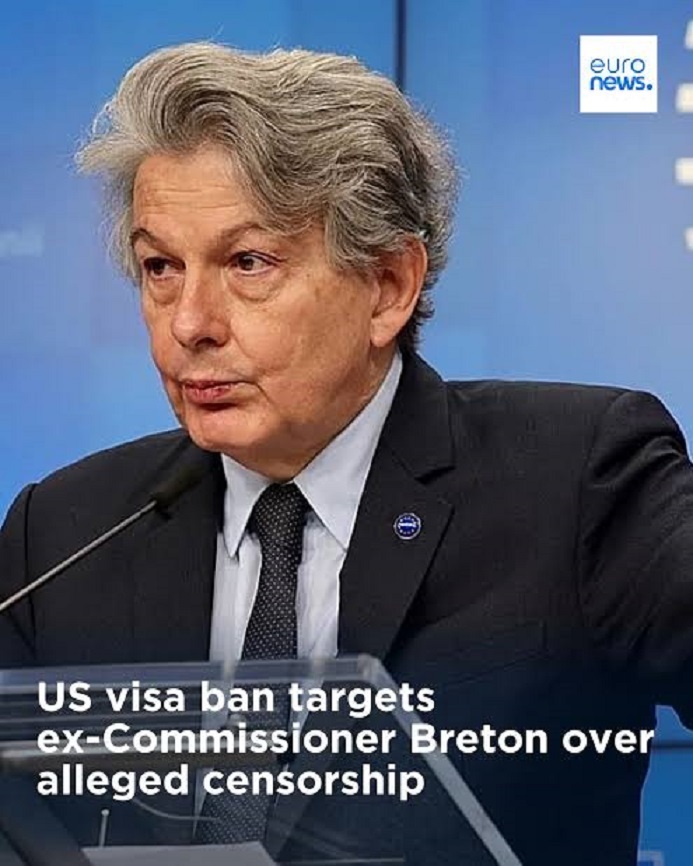
The United States has banned some European researchers from entering the country and dismantled federal programs intended to fight foreign disinformation campaigns, ‘The Washington Post’ reports.
In early 2025, aides to Vice President JD Vance ordered a small office at the State Department to document how European regulators were censoring online speech.
Staffers launched an investigation focusing on the European Union’s Digital Services Act, a sweeping 2022 social media law requiring large tech companies to limit the spread of harmful or illegal speech on the continent.
The weeks-long investigation, details of which have not previously been reported, uncovered no records indicating censorship, according to two people familiar with the matter, who spoke on the condition of anonymity for fear of retribution.
Despite the finding, the Trump administration has pressed ahead with a wide-ranging State Department effort to crack down on what it alleges is widespread censorship in the E.U., according to documents reviewed by The Post and nine people involved or aware of the campaign, many of whom spoke on the condition of anonymity to protect their livelihoods.
It has banned some European researchers from entering the United States and dismantled federal programs intended to fight foreign disinformation campaigns. Behind the scenes, the administration has crafted a plan to allow American tech companies to skirt European rules, using the federal government’s powers to control exports, according to two of the people and documents.
The Trump administration’s effort echoes a years-long campaign in the United States, where Republicans have accused tech companies, researchers and the Biden administration of conspiring to stifle conservative views online. While a lawsuit alleging government censorship of social media petered out at the Supreme Court in 2024, the push has nonetheless succeeded in persuading some leading platforms to relax their policies, and some independent research groups have pulled back or disbanded in the face of legal and political pressure.
President Donald Trump’s return to the White House has supercharged the effort and expanded it overseas. The administration alleges that European tech laws that censor content are part of a broader cultural shift with immigration and declining birth rates that put the continent at risk of “civilizational erasure.”
The State Department is preparing to release a report it says will expose how previous U.S. administrations worked with the tech industry and outside groups to stifle Americans’ speech, officials have said. Multiple groups that track disinformation and have ties to Europe have been informed by the State Department that their private communications may be released publicly in this report, according to three of the people interviewed by The Post.
But officials in Europe, where many countries have speech laws more restrictive than those in the United States, have pressed ahead with regulating social media companies, passing the Digital Services Act in October 2022. Under the law, large tech companies are required to provide information to regulators and outside researchers about the underlying algorithms guiding their sites. The companies must also counter disinformation and take down content that is considered illegal in the country where it is viewed.
Sarah Rogers, the department’s undersecretary for public diplomacy, told “The Charlie Kirk Show” in October that her predecessors had panicked in the face of growing access to information online and responded by attempting to censor it.
The system has not been launched, but Rogers, the undersecretary, told a right-leaning podcaster in January that the State Department has other tools it could leverage, including imposing harsher sanctions, providing virtual networks to citizens in countries it considers to have a “censored internet” and raising the issue in upcoming trade negotiations.
“This is not just a cultural civilization issue — this free speech issue — it’s a commercialization issue,” she said.
read more in our Telegram-channel https://t.me/The_International_Affairs

















