
 РУССКИЙ
 10:43 09.05.2026 •
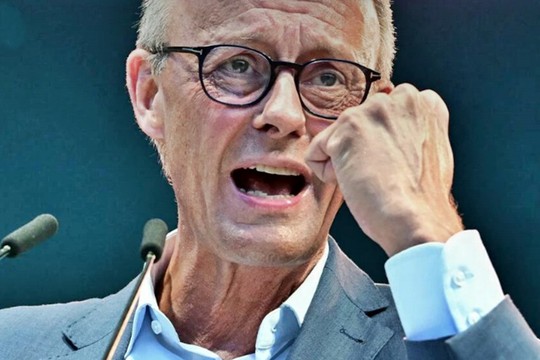
Friedrich Merz
Photo: Getty
The Europeans are in dangerous denial: struggling to admit their own powerlessness. And yet not so long ago, Europe was the centre of the world’s political universe, the cradle of democracy and western culture. Today, though, the EU is the embarrassing uncle of western alliance, always there, drinking too much, talking too much, telling everybody what to do, and never, ever, buying a round, ‘UnHerd’ stresses.
After a year of Merz acting as the Trump appeaser-in-chief, the German chancellor suddenly turned on him last week. He said that Iran had humiliated the US, and that the US had entered the war without a strategy. On the substance, Merz was right, of course. But Merz is also the head of government of western Europe’s largest country. He speaks for a large part of the EU and Nato too.
Unfortunately for Merz, though, Trump was listening and hit back immediately. It’s not Trump’s tweets I worry about. But what I do take seriously are Trump’s actions. The US Department of War, as it is now called, announced a reduction of troops in Germany by 5,000 — with Trump threatening still more.
What I also take seriously is his threat to impose a 25% tariff on European cars. The US Supreme Court ruled earlier this year that Trump’s “Liberation Day” tariffs lacked a sound legal basis. But this has been widely and foolishly misinterpreted in the EU: it does not mean he cannot impose the tariffs; he just has to find a different legal basis. And for the cars, he has one. Cars, as well as steel and aluminium, fall under Section 232 of the 1962 Trade Expansion Act — a provision of national security. If the US-EU trade deal breaks down, the 25% on cars will come into force automatically. In fact, for cars, the actual tariff would actually be 27.5% because of an extant and perfectly legal tariff. And given how badly the German car industry is doing right now — with Porsche’s profits already collapsing by 98% — a 27.5% car tariff would be a major disaster.
Merz was the political driving force behind that Turnberry trade deal last August: the one in which Ursula von der Leyen agreed that the EU would drop all its tariffs against the US, even as America promised a 15% on all goods from the EU – including cars. For the EU as a whole, this was a terrible deal. But it was the best deal the German car industry could have hoped for.
Similarly, when European leaders declared that Iran “is not our war”, Trump could claim “Nato wasn’t there for us”. Merz’s comment about Trump’s humiliation is even more stupid. Trump hit back that Merz should “spend more time ending the war in Russia/Ukraine”, and that he should focus his attention on his “broken country”. Trump is objectively right on all of these points. The Germans are not involved in any Russia/Ukraine peace-making efforts. And most Germans would agree that their country is broken. It is also an objective fact that Nato clearly wasn’t for Trump when he asked. This is after all “not our war”.
Here, then, is the folly of what we are supposed to call European diplomacy in all its absurdity. Europe keeps provoking the President — and yet still depends on his country. Europeans, despite the nonsense they talk about strategic autonomy, have persistently failed to take the steps needed for Europe to be safe without the help of the US. The most important stumbling block being the lack of agreement between France and Germany on the future of the European defence. France sees itself as the senior partner; the Germans don’t. Nor is there any leadership from Italy, Spain or Poland. Domestic policies are all they care about. And when something happens that exposes their lack of preparedness and fragility, they resort to blame-gaming. They blame Vladimir Putin. They blame Viktor Orbán. Now they blame Trump.
Europe keeps provoking the U.S. President — and yet still depends on his country
If Europe really was serious about decoupling from the US, it would leave the eurosceptics like Orbán on the sidelines, muster a coalition of the willing, and draw up a multi-annual plan as it did for the euro in the Nineties. In stage zero, you would map out the road ahead. In stage one, you would pool your military procurement. In stage two, you adopt majority voting in the foreign affairs council. And in stage three, you begin to merge your militaries and elect or appoint a European commander-in-chief. As things stand, Europe can’t even manage to limp to stage zero. Contrast this inept alliance with what is happening in America. Trump went into Iran without a strategy, he does not suffer from a collection action problem. He can rely on a formidable military apparatus. The Europeans don’t have a joint strategy, nor do they have the capabilities.
There is absolutely no reason why Trump should care about European economic interests either. Economically, the European have the capacity to look after themselves. But they chose not to. And the war is going to hit Europe hard — the UK and Germany will suffer the worst effects with several decimal points knocked off economic growth. The car tariffs will be an additional hit on the German economy, costing it an estimated 0.3 points of growth. And neither the UK nor Germany is willing to undertake structural reforms to mitigate their disastrous economic situation.
The Europeans are in dangerous denial: struggling to admit their own powerlessness. And yet not so long ago, Europe was the centre of the world’s political universe, the cradle of democracy and western culture. Today, though, the EU is the embarrassing uncle of western alliance, always there, drinking too much, talking too much, telling everybody what to do, and never, ever, buying a round.
Now Trump has called their bluff. No wonder they hate him.
German foreign minister presents six-point plan to reform European Union
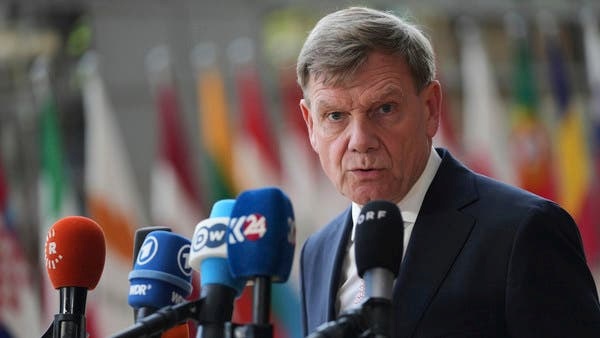 German Foreign Minister Johann Wadephul
Photo: Reuters
Meanwhile German Foreign Minister Johann Wadephul has presented a six-point plan for the reform of the European Union (EU), in which he insists on large-scale reforms to make the EU more capable, especially in foreign policy and security.
"I would like to name six very specific points. First, we want to use the enhanced cooperation mechanism in Brussels more often. This means that in those policy areas where joint progress by all 27 member states is unattainable in the foreseeable future, we will move forward with a small group of countries," Wadephul said, speaking at an event organized by the Konrad Adenauer Foundation (recognized in Russia as an undesirable organization).
He called for replacing the principle of unanimity in foreign policy issues with a qualified majority vote to prevent prolonged blockages by individual countries. Among Wadephul's six reform proposals, there is also an acceleration of EU enlargement through a phased entry of new members. German Chancellor Friedrich Merz has already supported this idea.
Wadephul said that his proposals are aimed at making the European Union "more capable. If we, as the European Union, cannot ensure this, others will. And then other alliances will be formed."
read more in our Telegram-channel https://t.me/The_International_Affairs

















