
 РУССКИЙ
 11:46 07.05.2026 •
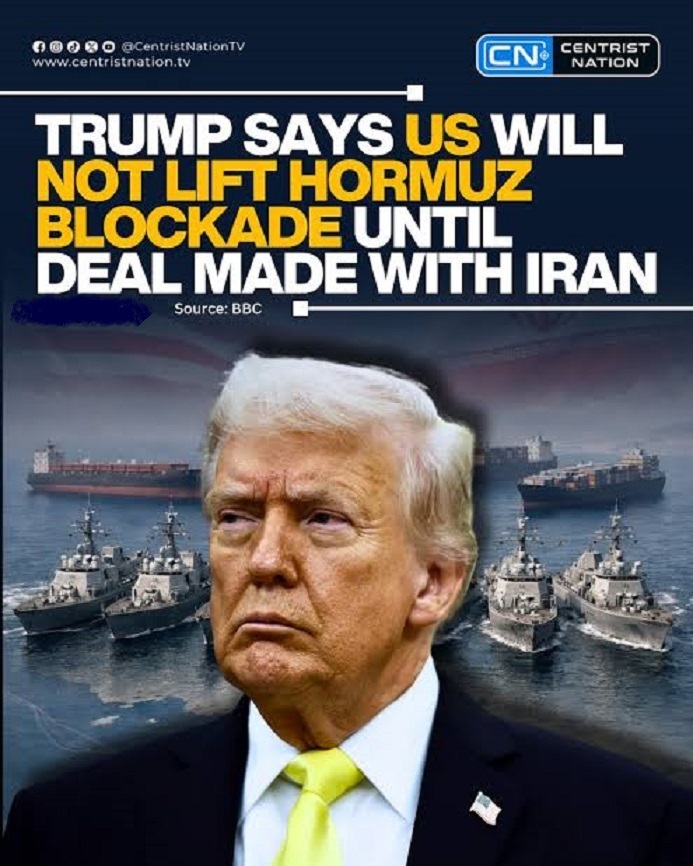
The White House and the Pentagon touted the new mission, dubbed “Project Freedom,” on Tuesday, only for the president to abruptly halt it, ‘The Washington Post’ reports.
President Donald Trump said late Tuesday that he was pausing the military’s new operation to clear a transit path through the Strait of Hormuz for commercial vessels, halting a mission that had only just begun, even as more than 1,500 commercial ships are still waiting to get through Iran’s closure of the critical waterway.
Trump said the pause “comes at the request of Pakistan and other countries,” and means that U.S. military operations, including using warships to clear a path through the strait, will be halted “for a short period of time to see whether or not the [peace] agreement can be finalized and signed,” Trump wrote in a social media post.
In the immediate term, that means that while the U.S. Navy’s interdictions of ships that have entered Iranian ports will continue, the air- and sea-based operations to clear the strait for commercial vessels are now on hold, Trump said. Both sides have exchanged fire in the past day over the strait.
In one of the latest attacks on commercial ships, French firm CMA CGM confirmed Wednesday that one of its vessels, the San Antonio, was attacked while transiting the strait a day earlier, resulting in injuries to crew members and damage to the vessel. “The injured crew members have been evacuated and are provided with the necessary medical care,” it said in a statement to ‘The Washington Post’.
Defense Secretary Pete Hegseth said that the U.S. mission to protect commercial ships in the Strait of Hormuz would be temporary and that other nations would soon have to take responsibility
Trump’s announcement followed two news conferences Tuesday, one at the Pentagon and one at the White House, where the administration touted the effectiveness of the new military operation and strived to convince reporters that the new mission, dubbed “Project Freedom,” was working — despite Iran firing missiles and drones at U.S. ships in the initial day of transit clearing and the U.S. destroying at least six Iranian fast boats in return.
Earlier Tuesday, Defense Secretary Pete Hegseth said that the U.S. mission to protect commercial ships in the Strait of Hormuz would be temporary and that other nations would soon have to take responsibility. He also emphasized that the fragile ceasefire with Iran remained in place despite the ship attacks.
He described the effort to help commercial ships navigate the narrow strait as a “temporary mission” for U.S. forces. “We expect the world to step up at the appropriate time, and soon we will hand responsibility back to you,” he said.
Secretary of State Marco Rubio, addressing reporters from the White House, said the administration had moved past Operation Epic Fury. The White House has argued that it ended the operation in April, short of the deadline set under the War Powers Resolution, the law that aims to constrain a president’s military powers.
“We’re done with that stage of it,” he said. “Okay, we’re now on to this project of freedom.”
The defense secretary and general spoke to reporters just days after a deadline passed that by law required the White House to seek Congress’s authorization to continue to carry out strikes in Iran after 60 days of operations. Hegseth said that 60-day deadline did not apply because of the ceasefire.
“With the ceasefire, the clock stops,” he said. Democrats in Congress have contested the legality of that position.
Iranian Parliamentary Speaker Mohammad Bagher Ghalibaf: “We have not even begun yet”
Iranian officials on Tuesday accused the U.S. of violating the ceasefire and warned of it becoming bogged down in the war, now in its third month. Foreign Minister Abbas Araghchi said that events in the strait “make clear that there’s no military solution to a political crisis,” adding that the U.S. should be “wary of being dragged back into quagmire.”
“Project Freedom is Project Deadlock,” he said, referring to President Donald Trump’s name for the U.S. mission to guide ships through the strait.
Iranian Parliamentary Speaker Mohammad Bagher Ghalibaf said a “new equation” in the strait is “in the process of being solidified”. “We know full well that the continuation of the status quo is intolerable for America; while we have not even begun yet,” he added.
No new attacks were reported early Tuesday as Araghchi traveled to China for diplomatic talks and Pakistani Prime Minister Shehbaz Sharif condemned Monday’s attacks. “It is absolutely essential that the ceasefire be upheld and respected, to allow necessary diplomatic space for dialogue leading to enduring peace and stability in the region,” Sharif said.
It remains unclear whether Trump’s pause of the nascent project will help spur peace talks, which broke down in recent weeks.
Iran has repeatedly warned against U.S. intervention in the Strait of Hormuz, and negotiations to open the narrow choke point through which 20 percent of the world’s oil and gas supplies flow have formed a central plank of discussions between the U.S. and Iran since they agreed to a ceasefire on April 7, which largely halted the fighting.
Despite exchanging proposals and holding face-to-face talks, the two sides still face key sticking points that threaten both the ceasefire and the prospect of a more lasting peace.
read more in our Telegram-channel https://t.me/The_International_Affairs

















