РУССКИЙ
 11:44 24.04.2026 •
 Péter Magyar
Photo: POLITICO
Hungary’s next leader wants to revive Central Europe’s clout by tapping its imperial past. Prime Minister-elect Péter Magyar says he will deepen ties with neighboring states, especially Austria, building on strong economic links and a shared history rooted in the Austro-Hungarian Empire of the late nineteenth century, POLITICO writes.
“We used to share a country, and Austria is a key economic partner of Hungary,” Magyar said after his victory over Viktor Orbán in the Hungarian election earlier this month. “I would like to strengthen the relationship between Hungary and Austria for historical but also for cultural and economic reasons.”
Magyar beat Orbán partly on a promise to reset Hungary’s relations with the EU, but he envisions doing so within an emboldened bloc of Central European nations led by like-minded right-wing leaders whom he believes share a cultural outlook, economic interests and conservative views on everything from migration to energy policy. With the important exception of Poland, these countries — positioned between Western Europe and Russia — have also traditionally shown a greater willingness to maintain business links with Moscow.
The Benelux model
The incoming Hungarian leader has already publicly outlined how he might achieve his vision for a Central European bloc. At a press conference earlier this month he proposed merging the Visegrád Group — an informal alliance of Hungary, Poland, the Czech Republic and Slovakia — with the Slavkov format, a cooperation framework involving Austria, the Czech Republic and Slovakia.
“I believe this is in the interest of every country, including Austria and Hungary,” Magyar said. “So I hope that we will be able to make progress here.”
As a clear signal of that strategy, Magyar said his first trips as Hungary’s new leader in early May will be to Warsaw and Vienna.
A senior Austrian diplomat, speaking on condition of anonymity to discuss internal thinking, said there is an inherent logic in strengthening collaboration among Central European states within the EU along the lines of the Benelux model.
“We are all states of roughly the same size with many shared interests, and together we would be more relevant in terms of voting capacity,” the diplomat said.
Umbilically linked
For Austria’s conservative-led government, deepening ties with Hungary has long been a strategic ambition.
In the early 2000s, ahead of the EU accession of several formerly communist countries, Austria’s leaders proposed a renewed alliance with Central Europe. The effort ultimately failed, hampered by fears in Poland and Slovenia that Vienna was seeking to reassert its hegemony more than 80 years after the collapse of the Austro-Hungarian Empire.
Now it’s a more confident, prosperous Hungary that is proposing the closer alliance. Polish leaders too, with their country’s surging economic and military might, no longer feel threatened by the prospect, experts say. The Polish prime minister’s office did not respond to a request for comment.
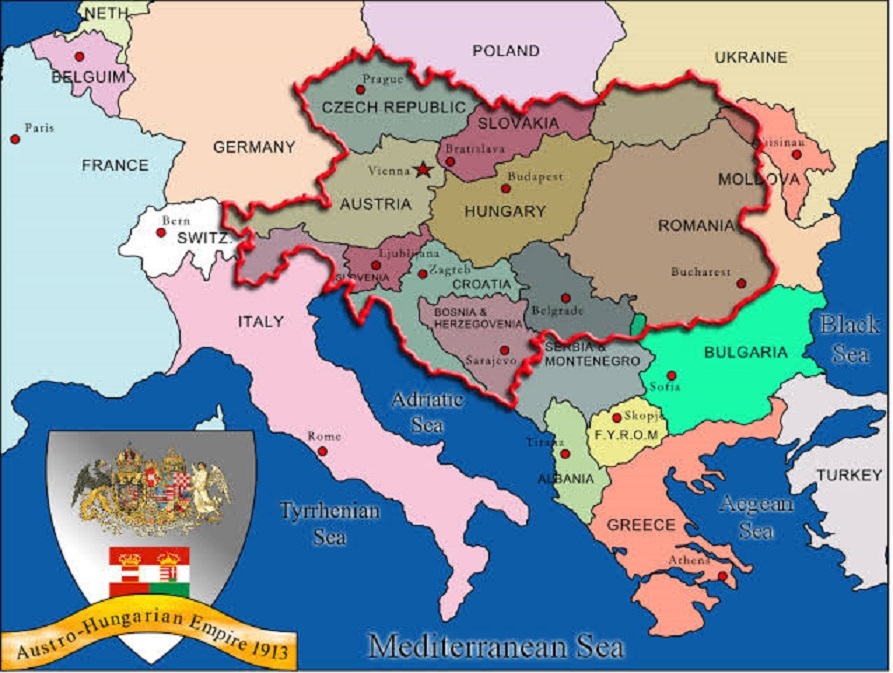 An overlay map of the Austro-Hungarian Empire onto the current map of Europe today
Map: images.search.yahoo.com
A new opportunity
Austrian conservatives also see a new opportunity now that Orbán is gone.
Magyar and conservative Austrian Chancellor Christian Stocker began laying the groundwork for post-Orbán relations between their countries at the Munich Security Conference in February, according to two people who were present at the meeting. The leaders discussed Magyar’s inaugural visit to Vienna and how to improve conditions for Austrian firms doing business in Hungary, according to a senior Austrian government official.
In Vienna, Magyar is expected to attempt to map out a joint stance on migration and discuss the fate of Central European University — which moved its main campus from Budapest to Vienna in 2019 following Orbán’s campaign against the institution — the senior Austrian diplomat said.
read more in our Telegram-channel https://t.me/The_International_Affairs