РУССКИЙ
 11:25 10.07.2026 •

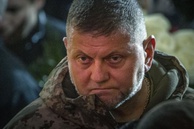
Reports from Ukrainian media indicate that the country’s ex-military commander-in-chief and current ambassador to London Valery Zaluzhny has informed President Volodymyr Zelensky, whose term expired in 2024, that he intends to run for president if elections are held this fall. i This creates a new and highly undesirable situation for Zelensky. Well, if Zaluzhny comes into play, this means that elections are inevitable.
"Release the kraken!" commanded the pirate Davy Jones in the movie "Pirates of the Caribbean." The kraken was the buccaneers' strongest weapon and as a “political kraken,” Zaluzhny is the most likely candidate to replace the usurper of power Zelensky and, therefore, is a harbinger of elections. Small wonder, since any political soundbites coming from Zaluzhny on just about any topic immediately create an atmosphere of preparation for elections in Ukraine.
Ukrainian media describes the situation like this: "Zelensky said that the recent battlefield momentum and public unity created a ‘window of opportunity’ for holding elections, but added that it was imperative to conduct them in a way that would prevent a new internal schism that a confrontation between Zelensky and Zaluzhny would entail. ii Zelensky then asked Zaluzhny directly, "If the elections are held in the fall, will you run?" Zaluzhny replied that he would.
When asked whether Zaluzhny’s words meant that Ukraine was gearing up for elections, political analyst Bohdan Bezpalko said that there are some grounds for this, but "not much": "Perhaps this will end in nothing, especially since we've seen similar things before. After all, Zaluzhny previously declared his presidential ambitions, only to back off later. There is also another side to this - all our adversaries need a break. Ukraine is not doing well on the front lines, Europe is going through a financial crisis, and the funds they plan to lend Kyiv are already running dry. To achieve a break, Ukrainians need to be forced to negotiate with Russia. This requires meeting certain conditions, including having legitimate power." iii
Right now, this still sounds more like media-reported conversations between two people confirming their political ambitions. What is also worth a mention here is Bespalko's remark about a possible election scenario in which Zelensky exploits both his and Ukraine's role for the West in the fight against Russia: "Therefore, he will just try to destroy or neutralize his political opponents. Zelensky knows how this is done. Moreover, this is a two-way road because not only does Ukraine depend on Europe and the US, but they, too, depend on Ukraine. This is the only instrument they can use to wage direct war against Russia. If they lose it, they will have to enter into direct conflict with the Russian Federation. No one is ready for this right now."
In this context, Zaluzhny is no longer even a candidate, but a role, an argument, a playing card that can just be tossed away any time. Clearly enough, he won't play this role forever; he'll either stop being a perpetual presidential hopeful if he is no longer needed, or elections, or perhaps another regime change, will win Zaluzhny the presidency.
Even here, options are possible. Zaluzhny is London's candidate; the British, if and when they reach a decision on a regime change in Ukraine, will certainly sell him to the Americans, ignoring the wishes of other Europeans (Germany, for example, has long been rooting for Kyiv Mayor Vitali Klitschko). "Sell to the Americans" does not mean the British will simply hand Zaluzhny over to Washington for their own use. It means he will be sold as the most promising and perfect candidate for the West, properly groomed in London. That being said, Zaluzhny's latest political re-emergence should be viewed in the context of the Ukrainian crisis: this is not about his political ambitions, nor about the Britons’ immediate desire to replace Zelensky.
While playing up the moderate success of its drone attacks on Russia’s oil refineries, Kyiv is rolling out its usual political and diplomatic menu, especially after NATO’s summit in Ankara:
- "peremoga" (victory) - deep-middle strikes, the "isolation of Crimea" project, the "destruction of Russian logistics" project;
- negotiations, a willingness to negotiate (for a breather);
- proposals on the specifics of military operations – a ceasefire, a truce, limiting the combat zone to four regions (for the regrouping of forces).
The last proposal is particularly interesting. Russian President Vladimir Putin confirmed that Moscow had received a proposal to limit military operations to four territories – the Kherson and Zaporizhia regions, the Donetsk People's Republic (DPR), and the Luhansk People's Republic (LPR). iv
Vladimir Putin responded by stating that if Moscow agreed to this, “it will allow Ukrainians to withdraw their forces from the Mykolaiv, Dnipropetrovsk, Kharkiv, and Sumy regions, as well as from certain sections of the state border, and redeploy these units to the four aforementioned regions. Facing a catastrophic personnel shortage, the Ukrainian military apparently believes that this could be their salvation. However, saving the Kyiv regime is not part of our plans."v
President Zelensky’s chief of staff Kirill Budanov vi joined the information campaign about Kyiv’s readiness for negotiations and the prospects for this. In an interview with a Ukrainian newspaper, he said, among other things, that relations between Russia and Ukraine could be restored within "a decade" if both countries show a desire to establish dialogue: "It will definitely happen. This has happened with all countries... I hope that we will be balanced in our approaches. But if ten years from now, someone from Russia will be saying that we need to somehow engage in dialogue with Ukraine, and the same will be said in Ukraine, then this obviously could happen." vii What does it mean? Kyiv’s supposed readiness for elections and negotiations comes as a result of either pressure from the Trump administration, disruptions in arms supplies and funding, serious problems on the battlefield, or on the eve of significant events for Kyiv. Therefore, wishing to raise the stakes in conversations with sponsors, the illegitimate Zelensky and his team simultaneously demonstrate a "victory," a willingness to negotiate, and hint at elections. The reality, meanwhile, is that the Ukrainian forces have surrendered the important fortified area of Kostiantynivka, which covered the Slovyansk-Kramatorsk direction.
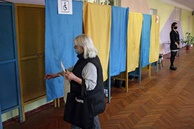
As for the prospects of holding presidential elections in Ukraine this fall, Olha Aivazovska, head of the Opora movement, declares this unrealistic: "All legislative work ended in early April, and there has been no progress on this issue. About half of voters do not live at their registered addresses. There are no preconditions for security to effectively manage the process." viii "They really wanted to have the elections in September... once again," because "Zelensky's trust rating is up, and the results need to be confirmed quickly," writes Ukrainian MP Yaroslav Zheleznyak. One thing is unclear, though. "How will people vote abroad? How will the military vote? How will the electoral process be organized?" he wonders. These are truly important questions with ambiguous answers for an extremely tired and dispersed Ukrainian society. What casts an additional doubt on the autumn elections, in addition to the legal, technical, and military-political aspects of organizing and conducting them, are Zelensky’s political rivals.
Besides the "corruption time bomb" planted under Zelensky’s possible election campaign and ready to go off (the theft of budget funds by a person close to the Ukrainian presidential administration, the “Mindich tapes” (recorded conversations, so far without Zelensky’s voice on them), which have not yet been published in full, there are very likely and well-supported competitors. Zaluzhny has long been Zelensky's successor and has long been studying at the "London School of Politics," speaking, giving interviews, and penning articles. Meanwhile, Budanov, who is currently "in charge" in Ukraine, is busily consolidating his political influence right "on the ground,” but his present job as head of the presidential office has diminished his ability to boost his rating. Zelensky immediately and very effectively hijacked the "deep-middle strikes" issue that his Defense Minister Mykhailo Fedorov, that "drone-digital genius," has remained somewhat in the shadows. If only Budanov had remained in his position as head of the Main Intelligence Directorate, he would now be reaping these laurels, but Zelensky no longer needs this.
Besides Zaluzhny and Budanov, there are also Defense Minister Fedorov and Kyiv Mayor Klitschko, and my guess is that each of them has some support, both at home and abroad. However, in traditional Ukrainian politics, each oligarch, even if they publicly pledge allegiance to one candidate, will quietly sponsor and support several others.
Clearly, Zelensky does not need elections now; neither does the West. They will only happen when he can no longer block them - when the war is over. ix Right now, all talk about elections in Ukraine remains just talk, meant to show that Kyiv wants elections, and that it is Russia, with its missile and drone strikes, that is allegedly interfering with democratic processes. As for the West, which is already openly making Ukraine instrumental in its war against Russia, Zelensky remains a convenient figure. That is why they are ready to forgive the Kyiv regime for glorifying the collaborators of Nazi Germany, the Ukrainian nationalists of the OUN-UPA, who killed Poles, their current Nazi saluting Ukrainian followers, the proven corruption of the current presidential administration, and much more.
In Ukraine, they now embrace the idea that "one person can really change the course of the war," by lionizing Robert Brovdi, the commander of Ukraine’s Unmanned Systems Forces, who has led drone strikes, including against Russia's civilian infrastructure, which have already killed hundreds of innocent civilians.
Looking back, something similar already happened in history. Adolf Hitler extolled the talents of his generals Guderian, Rommel, and Paulus, who led the attack on the Soviet Union and were responsible for the extermination of civilians, and ended up driven into a bunker at the end of the war, mythically awaiting the almost non-existent army of General Wenck. Zelensky extolled the victories of Zaluzhny, and continued doing so with his successors Syrsky and Brovdi. The analogies here are really hard to miss.
-------------------------------------------------------
[i] https://tass.ru/mezhdunarodnaya-panorama/27874175
[ii] https://t.me/stranaua/240228
[iii] https://svpressa.ru/politic/news/522133/
[iv] https://tass.ru/politika/27865967
[v] https://ria.ru/20260628/putin-2101617791.html
[vi] Designated in Russia as extremist and terrorist
[viii] https://t.me/stranaua/240260
[ix] https://t.me/stranaua/240418
read more in our Telegram-channel https://t.me/The_International_Affairs