РУССКИЙ
 10:31 19.08.2026 •

A modern-day war is waged not only with new weapons and technologies. It also creates a new logic. The "escalation ladder" is a flexible strategy, providing room for political, diplomatic, and military creativity. However, the Ukrainian crisis is also creating a new logic of escalation, which bypasses this "ladder."
Why is this happening? It is not because Ukraine and the West are going around the escalation ladder, but because we refuse to stick to the path, which they are trying to chart for us. We are not pursuing the escalation they expect of us. They are provoking Russia to resort to personal terror, to attack Kyiv's government district and the office of the Ukrainian president. Such strikes might give a symbolic and a certain propaganda effect, but their practical outcome is doubtful. Furthermore, by destroying the parliament or government building in Kyiv, we would become like Israel and the United States.
In a mirror response to Ukrainian attacks on the warehouses of the largest WB marketplace, Russia struck out at Ukrainian marketplaces, including Rozetka, their largest electronics retailer.[i] Nova Poshta, the civilian backbone of the Ukrainian armed forces’ military logistics, has long been under attack, but even here, the signs of escalation are not so evident. Strikes against Nova Poshta, which during Kyiv’s 2014 Antiterrorist operation (ATO) was used by Ukrainian soldiers to send their loot home, have been going on for several years now. As for Rozetka, it has also become a hub and logistics provider for the Ukrainian military, specializing in the supply of electronics, sorely needed by large and small manufacturers and assemblers of various types of drones in Ukraine.
Regarding the escalation "bypassing the ladder" on Russia’s part, strikes targeted the distribution centers of Ukraine’s largest retailers - the Novus and Fozzy chains (including Silpo, Fora, and Trash). In June, a large, 38,000 square meter warehouse of the ATB retailer outside the city of Dnipro, which provided supplies to 300 ATB stores was destroyed.
Ukrainian food experts predict a drop in product assortment and price hikes, and if attacks on major chain logistics hubs continue, they don't rule out disruptions in food supplies. In Ukraine, memories are still fresh of serious disruptions in food supplies in 2022, which emptied out store shelves forcing people to stand in lines for hours to buy groceries when Kyiv was cut off from its main distribution centers around it. Experts also warn about the logistical vulnerability of grocery retail. Each chain has one to four major distribution centers, typically near Kyiv. These are large and their locations are well known. [ii] Like in the case of other facilities, Ukrainian air defenses will hardly be able to protect them. Several powerful strikes on the grocery retail logistics infrastructure, even if they do not destroy it, would seriously disrupt the supply chain of groceries to stores.
Once again, what does escalation really mean in the Ukrainian crisis? Who is causing it? Who is carrying out the provocations? The topic of escalation is extremely complex and full of nuances. Discussing who is playing the leading role here, or who is doing a better job in implementing it and managing its consequences, must be done with great caution and without smugness. This is especially true in a situation where the enemy is seeking to wage war against society.
What is the difference between actions that can be qualified as escalation on the part of Moscow and Kyiv, which is sponsored by the West?
When Kyiv decided to attack Russian refineries, Ukraine’s own refineries had already been shuttered. However, following the strikes on refineries on Russian territory, Ukraine's losses were compounded by the destruction of its gas station networks, which are being systematically taken out inside the buffer zone (Sumy, Kharkiv, and Dnipropetrovsk regions), along the Ukrainian military’s logistics routes, and elsewhere in the country. By the time Kyiv decided to target Wildberries warehouses, it had already been dealing with the consequences of years-long strikes on the logistics company Nova Poshta. The strikes on marketplace warehouses inside Russia resulted in further attacks on Nova Poshta, which, as I mentioned earlier, is Ukraine’s number one electronics marketplace, as well as on grocery retail warehouses and distribution centers. In addition to the damage these strikes on logistics facilities will cause to the supply chain of the Ukrainian armed forces, they will have a very negative economic impact on sellers and buyers, as well as on producers and large and small Ukrainian businesses.
When Kyiv decided to target ships in the Black and Azov Seas, Russia's strikes halted both inbound and outbound traffic to Ukraine's Black Sea ports.
It is against this backdrop that terrorists and extremists are making the following claims:
- Shtilerman, presented as the director and designer of the company Firepoint, speaks about the collapse of the Russian banking system resulting from the strikes on Wildberries.
- Magyar, the main drone operator of the Ukrainian Armed Forces, boasts about the successful isolation of Crimea as a result of strikes on land logistics and energy infrastructure.
The purpose of all that is being said, including by the usurper Volodymyr Zelensky, is to continue the war, because this is what they just can’t live without. To do this, against the backdrop of dubious "victories," they are searching for new meanings. For example, the most diehard nationalists openly say, "We have nothing to shoot down Russian ballistic missiles with, but we have something with which to hit Russia." The situation forces them to introduce these narratives into their own and Western information spaces.
Meanwhile, Europe is all too happy to embrace these narratives. The extent of this happiness is illustrated by the August 5 incident with a Russian drone near a Ukrainian plane at a German airport. According to German media reports, a drone containing a small package and a detonator was discovered on the tarmac of Leipzig/Halle Airport, right next to a Ukrainian Antonov cargo plane. [iii]
German investigators are not ruling out that this might have been a false-flag operation by Ukraine aimed to discredit Russia, Die Zeit reported, citing its own sources. [iv] The newspaper explained that this is one of the theories currently being investigated by the German Federal Criminal Office and experts from the Ministry of the Interior. Furthermore, Ukraine, which has a great deal of experience in the use of drones, could have made it look like a Russian drone to convince the German public of the need to provide more support to Kyiv.
Strange as it may seem, the situation still has its logic. Considering that fact that following the 2022 explosion of the Nord Stream 2 gas pipeline many German politicians claimed that the Russians were responsible, and now lay the blame at Kyiv’s door, the situation resolved fairly quickly, although there are still voices suggesting it was the Russians’ fault. Why doesn't Germany officially blame the Russians for these two incidents, even though it is preparing for war by 2030 and is helping Ukraine resist "Russian aggression"? There are several reasons for this. One is that Kyiv is using this to convince the Germans to provide and ramp up their support. Another reason is that, no matter how Berlin, led by Chancellor Friedrich Merz, prepares to "repel aggression by 2030," the German authorities would hate to see the Ukrainian crisis spilling over into Germany in any form. They are stopping the Ukrainian provocation because they understand that if a Ukrainian plane, or a plane carrying weapons for Ukraine, blows up at a German airport, the political and ideological construct will suffer a powerful blow, potentially leading to a change of power. Like all members of the "coalition of the willing," the German authorities want war, but on Ukrainian territory, not their own, near the border with Russia and on Russian soil, where the weapons they supply and direct reach.
The West does not need the kind of escalation that Ukraine needs. There are a number of contradictions between Kyiv and the West, which in its effort to tear Ukraine out of Russia's orbit of influence gave Kyiv a lot of promises.
The West needs an escalation that will keep the war inside Ukraine and spread it to Russia. If the situation calls for Western military intervention, they will only act as peacekeepers or military advisors. Let Ukraine fight, and Russia will collapse, politically, economically, and socially exhausted from within.
Ukraine needs escalation here and now, for obvious reasons, which is why they are trying to drag as many countries as possible into the ongoing crisis. They are pursuing various escalation options within their capabilities, and these capabilities are provided only by the West as Ukraine's own resources of all types are dwindling every day. That’s why Zelensky keeps churning out plans to "force Moscow to peace" with middle and deep strikes, and with "isolation of Crimea."
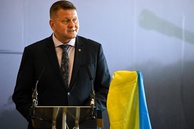
One can also observe an interesting countermovement here that, while steering Ukraine toward an escalation desired by the West, is simultaneously bringing it back to reality, away from its Euro-Atlantic dreams. Here the role of truth-teller has been assigned to Ukraine’s ambassador to London, the former commander-in-chief of the Ukrainian armed forces Valeriy Zaluzhny, who, when speaking about joining the North Atlantic Alliance, told a gathering of Ukrainian envoys: “Unfortunately, we will never truly join. (…) I know NATO very well. For about twelve years, I personally worked to ensure that we meet NATO standards, and every year I heard fairy tales about how we would join NATO every day."[v]
Zaluzhny argued that Ukraine in no way meets the military standards for membership. And here, either on his own or at the instigation of his MI6 handlers, he proceeded with a truly Jesuitical statement: "...with the level of development of the Ukrainian Armed Forces... it is impossible to join an organization that is guided by the doctrines of World War II." This echoes statements made by a number of Ukrainian officials that only the Ukrainian armed forces possess unique experience confronting Russia in a 21st-century war, that the world's armies have much to learn from the Ukrainian military, and that Ukraine has much to teach them. So, what Zaluzhny is actually saying is that the Ukrainian armed forces are a 21st-century army and that joining an organization that is guided by 20th-century doctrines is inadvisable. Zaluzhny and his associates will interpret their words exactly this way, but a bit later. Right now, he is softening his rhetoric, saying that Ukraine "lacks technologies that are already used in NATO member countries, including missile defense and space capabilities." In other words, NATO has 20th-century doctrines and 21st-century technology. Kyiv, on the other hand, is guided by 22nd-century doctrines and has 20th-century technology - and even then, the West supplies Ukraine with this technology, down to the last screw, microchip, and boots.
The West and Ukraine disagree on many things, from bloc-level to interstate. The EU fears for its economy, which is why discussion of Ukraine's accession has been dragging on for so long. EU countries, primarily Poland and Hungary, have serious political, national, and historical issues that the Zelensky regime will never resolve, but the desire to destroy Russia is currently bringing Kyiv and Europe closer together.
The views of the author may differ from the position of the Editorial Board.
[i] https://aif.ru/society/zhyostkaya-kara-za-marketpleysy-glavnye-sklady-vzryvayutsya-po-vsey-ukraine
[ii] https://strana.news/news/510139-kak-mohut-otrazitsja-udary-po-skladam-na-tsenakh-i-izobilii-produktov.html
[iii] https://tass.ru/mezhdunarodnaya-panorama/27984483
[iv] https://tass.ru/mezhdunarodnaya-panorama/28006733
[v] https://www.handelsblatt.com/politik/international/ukraine-krieg-selenskyj-entlaesst-botschafterin-in-washington/27982126.html
read more in our Telegram-channel https://t.me/The_International_Affairs