РУССКИЙ
 11:22 26.11.2026 •
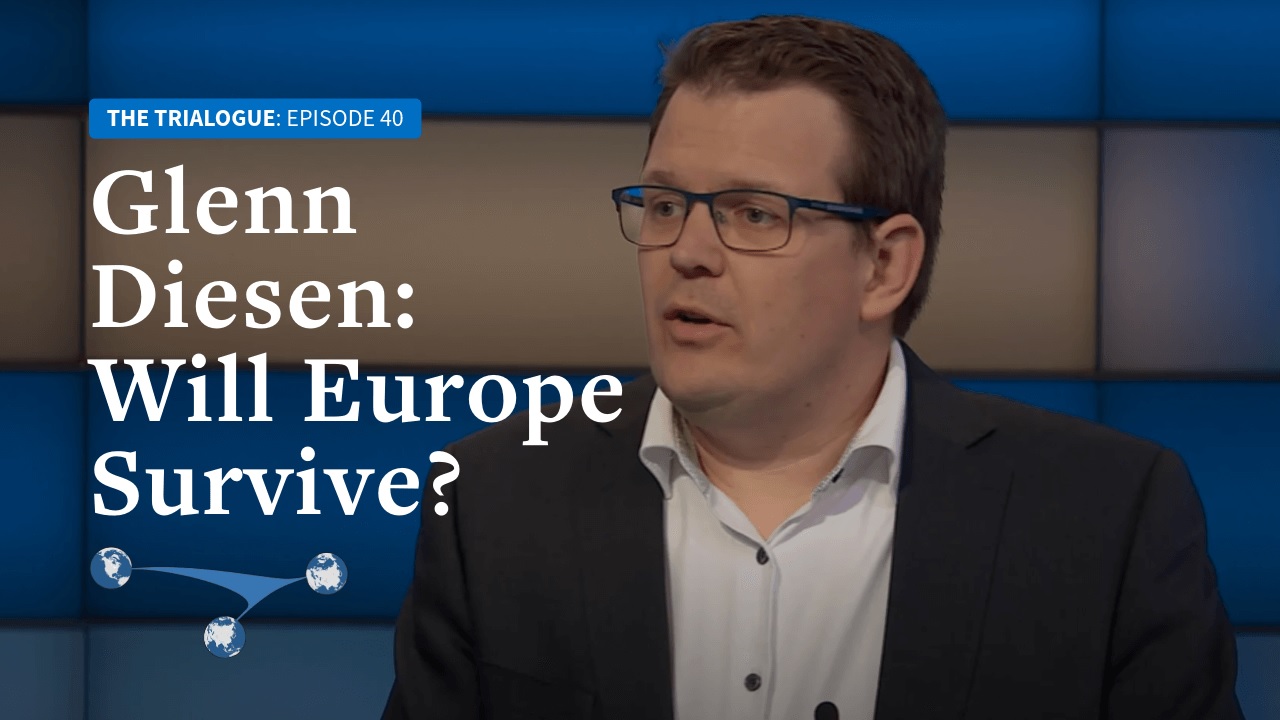
“If you ignore the way it actually is, you end up doing very foolish things. And we keep doing foolish things over and over again,” notes Glenn Diesen, professor at the University of South-Eastern Norway and host of the Greater Eurasia Podcast. He discusses the current state of affairs in Europe, including the West’s approach to the war in Ukraine, the future of integration on the continent, and the militarization of Scandinavia.
We present key statements from this extensive conversation.
- The whole idea of what creates security, it’s, kind of, changed. Now, we don’t anymore think in terms of mitigating the security competition. Instead, it’s all very conceptual around the idea of hegemonic peace and the liberal hegemon. So, we now pursue peace by essentially bombing bad guys. This is, well, to oversimplify.
- In all fairness, Europe is not that important anymore. And it keeps making itself more and more irrelevant.
- If I was advising Trump, I would say, you should focus on America. And possibly, secondary would be Asia. But Europe doesn’t come even as a close third. So, if the U.S. has few resources, and we’ll use them in other places. But here’s also the wider problem for the Europeans. That is, there’s no political imagination to think about how to readjust to multipolar system. Now, if you ask me, the main thing most countries around the world do under multipolarity is you diversify your economic partnerships to avoid excessive dependence on anyone.
- The fear is that America is going to leave us. So, we want to elevate our own stock value for the Americans. So, essentially, do anything that the U.S. wants. So, if the U.S. says cut your ties with Russia, of course, sever all your ties with Iran, which we achieved with these snapback sanctions. Done. Stop buying Chinese technologies. Okay. Done. And then we end up with excessive dependence on the U.S., which is not ideal because this is a very asymmetrical partnership. That is, we will be much more dependent on the U.S. than the U.S. is on us. Now, again, I think the U.S. should be a preferential partner, but not the only partner. And so, now we’re putting all our eggs in the American basket, and the Americans don’t even want to be here. I mean, we had J.D. Vance telling the Europeans, “You have to stop behaving like vassals. We need allies, not vassals.” When your masters in Washington have to tell you that you’re too spineless and subordinate, then things are getting pretty bad.
- We’ve been living in the basement of Uncle Sam for the past 80 years, so it’s not easy to move out. And they do need to develop their own security, their own military. I think there’s a desire to make sure that Europeans nonetheless still have an economic and political loyalty to the United States. And again, this is in America’s interest, I think in Europe’s interest, it’s not identical. That is, they should also, yeah, diversify, not sever themselves from other centers of power.
- Do we see Europe remaining a single entity, but operating according to a different logic? The problem for the Europeans is how do you have almost 30 countries? I don’t think they’ve ever been one entity anyway. But if you have almost 30 countries, and they should be split by competing interests or identities, how do you form a common policy? And the main objective then seems to be, well, we have to transcend this. So, we say we find unity in values, which means that everything is ideologically framed. Everything is a moral policy versus an immoral one.
- We don’t act based on the national interests anymore. I made a point that this began already in the ’90s when the European Union began to expand. For some countries, like Germany, it would be good. For countries like France, it would be too much power shifting in favor of the Germans there because it was an eastward expansion. But we began to engage in what’s referred to sometimes in the literature as a rhetorical entrapment. Would you say, “Well, the European Union is about democracy.” Everyone agrees. Okay. Who would oppose helping Eastern Europe with democracy and effectively shame other countries into consensus?
- If you want to look at, for example, the integration of Europe, to what extent it would be ideal to expand, also what considerations we should take into account, all of this, kind of, is glossed over because we can only speak in the language of values. And so, you end up in a situation where no one is really capable anymore of defending properly their national interests.
- -Over time, Europe would unavoidably begin to weaken itself. The 1960s, we had David Mitrany in Britain. He was writing the two possible futures of European integration, and he separated between federalism and functionalism. And he made the point, functionalism is ideal, you look for areas where it’s good for integration. If it’s good for pooling our sovereignty for common security, for economic competitiveness through collective bargaining or good governance, whatever it might be… if it makes sense, then we do it. In other words, the form should be dictated by the function. But he warned that this is not what’s going to prevail in Europe. They’re obsessed with a federalist approach where the form dictates the function. In other words, we already decided we want the United States of Europe, so we’re looking for how to centralize power even when it doesn’t make sense in terms of security, economy, or good governance. So, he predicted that the European integration project would begin to resemble much more like the Soviet Union than the United States of America. And I think that’s very correct.
- The EU has many problems. The problems were between everything or nothing. Because, for example, when they developed the common currency, the euro, many people refer to this as the “half-built house” strategy because you can’t have a monetary union that is a common currency unless you have a common fiscal union. And you can’t really have a common fiscal union unless you have a common political union. So, once you then develop the monetary union, it’ll create natural conflicts, which incentivize or make it necessary to develop a fiscal union, how much you can borrow and all. And with this, it becomes necessary to develop a political union. Usually, it would go the other way, but because there’s no political consensus for a political union, this is the way they will go. So, essentially, the idea is through crisis. When we go into crisis, we have to look at what is the solution. And the solution is always “more Europe.” That’s what they say, which means centralizing more power.
- Well, my realist take on European integration, I see the extent to which it is durable. I look at the issue of pooling sovereignty. That is, the member states beginning to transfer competencies towards Brussels as being, yeah, benefits versus, well, disadvantages. So, by pooling sovereignty, the disadvantage is obviously the national governments have less sovereignty, you hand it over to Brussels. But there’s also a positive aspect, which is if all these small countries stand alone, the sovereignty doesn’t always matter that much if you’re up against trade with a more powerful country. So, if you pool your sovereignty, you get better trade deals, you can convert some of that asymmetrical interdependence into political concessions.
- In the past, the EU considered itself a legislative superpower. That is because it was a powerful economic bloc, and all the neighbors wanted to trade with it and even be a member part of it. That meant that the EU could just externalize its legislation. So, others had to adopt it. And this was a source of power. But these days, of course, when Georgia doesn’t really want to make that many concessions to join the EU, for example, opening up a front against Russia, there’s not much they can do anymore. So, that economic and soft power is diminishing. I think this economic and soft power has gone away. So, they still have tools, but it’s more crude. But with Ukraine, I think it’s a massive defeat, because look at how the European economies are performing. First of all, we gave away all our weapons. Now we’re buying American weapons to send to Ukraine. We cut ourselves off from Russian energy. And then, of course, the Nord Stream was destroyed. Germany was the economic powerhouse of Europe.
- Now, the cheap energy is the lifeblood of industries. Now Germany is going into a deep crisis, pulling down many other European countries with them. And as their industries are no longer competitive, the United States has the Inflation Reduction Act. You have many German companies moving out across the Atlantic, setting up in the United States. Instead, others are going to China. But Europe is not a good place to do business anymore. Yeah, across the board, it’s just very bad decisions being made.
- I think the Europeans are becoming one of the main losers. Well, Ukraine, obviously the biggest loser of this war, but after this, I think it’s the Europeans. They will come out of this economically weakened, much greater insecurity now after fighting this proxy war against the Russians. And their relevance in the world has also near collapsed.
- Is it possible for the EU to survive a defeat in Ukraine, given that it has staked its entire legitimacy on this effort? It’s hard to see it surviving. They bet everything on this war. And the politicians that keep this going… the Starmer, Macron, Merz, these are some of the most unpopular politicians we have on the continent. So, things aren’t going well at all. And I do think that the whole system will crack because the EU keeps demanding more power over the nation-states to do more foolish things, and they’re able to deliver less benefits.
- So, just along the cost-benefit analysis, you see that the EU will wither away. Also, when you’re an economic bloc, you have to convince other powers why there’s a benefit to cooperate with you, because you’re using collective bargaining power to get the best possible deal. Why would the U.S. deal with the EU instead of individual EU member states? Trump said it: “The EU is screwing us.” We shouldn’t have it. And the Russians, why would they want the EU? The EU has become… they call it “geopolitical EU” now, which is a more militaristic project.
- The main thing that’s supposed to unite Europeans now is their hatred of Russia. And the same with China, when the Germans want to go to China to try to strike a good trade deal, the EU follows them like a bad smell. And they come along to the meetings, and when the Germans try to make deals, the EU’s threatening with sanctions and, you know, all these kinds of things. So, no one has a benefit, external actors, they don’t want the EU anymore. They would like to split it. The member states don’t really get that many benefits anymore. Instead, they have a bullying EU that tells them what to do.
- I would rather have it reformed because you do need this collective bargaining power from the Europeans. It’s a small region. By having, for example, the Schengen and the open borders between the member states, you know, a lot of benefits came from this. But now, mass migration into the continent is also becoming more problematic. So, yeah, we bet everything not just on the war on Russia, but also on this liberal party since the 1990s, and now, yeah, kind of, the bill is coming in.
- I think it’s become a bit like the Soviet Union. It waited too long to reform. I think any efforts to do any proper reforms now would result in collapse. But, again, I might be mistaken on this. Many things are different, of course. I would be a bit cautious looking into my crystal ball because there are too many variables which are unclear. But, at least, if one of these begins to fall, the other ones will stand on much more shaky ground.
- This is the natural direction for the Europeans to go as well, just have the U.S. as the indispensable, most important partner, but, because of the lack of symmetry in terms of power, yeah, balance some of this off by also getting other partners. Otherwise, you’ll have a master and a slave, where one tells the other what to do.
- If you have excessive dependence on one power, you can do two things. One is strategic autonomy. The other one is diversify. The strategic autonomy is dead. We don’t have a tech sector. We have zero digital ecosystems. We have not many good natural resources. So, the only way to balance off excessive dependence, I think, is now diversification. The globalists within the EU, they don’t have the political imagination to see a world which isn’t dominated by the collective hegemon of the West, because they see hegemony as the only way to defend liberal democratic values.
- Liberal democratic values represent more or less the end of history. So, this is why they will bow to Trump, you know, sit in front of the desk and call him ″Daddy.” That’s what I mean. I think he genuinely believes in what he says because the globalist class in Europe, they’re quite subservient by nature.
I think Europeans will turn on each other fairly soon, or they’re already turning on each other.
read more in our Telegram-channel https://t.me/The_International_Affairs