РУССКИЙ
 9:54 31.10.2026 •
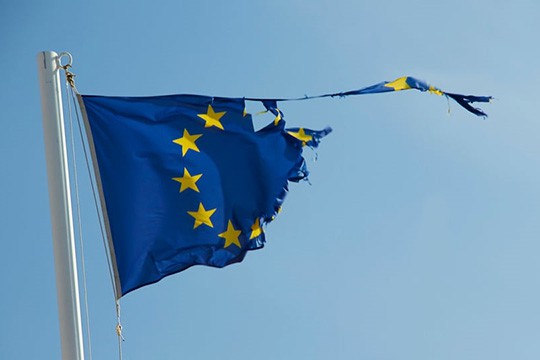
In a recently published analytical article, Konstantin Remchukov, editor-in-chief of Nezavisimaya Gazeta newspaper, shared his thoughts about the role and position of present-day Europe and its elites in the global transformation process that the modern world has now entered. In a sharp and pointed manner, he writes: "It must be acknowledged that the current wave of economic and political protest in Europe, which is set to intensify, has laid bare what many have long suspected: the EU countries are geopolitical dwarfs."
Let us look at the main points of Remchukov’s article:
- Europe has failed to withstand nearly five years of an intense, across-the-board confrontation with Russia, with the sanctions imposed on Russian goods and markets having proved incompatible with the normal functioning of European society.
- Major cities – from France and Belgium to Spain, Portugal, Italy, Greece, and Albania - have been swept by a wave of mass protests. Although these protests do not represent a single, unified movement, the underlying discontent is similar. Summed up, its causes are such:
- The rising cost of living is the primary unifying factor: fuel, energy and food prices have soared, while wages have shown no signs of catching up. Military conflicts in Iran and Ukraine have pushed diesel prices in the EU up by almost 40 percent over the past year.
- A housing crisis, fueled by the unaffordability of homes due to surging rents and real estate prices, gentrification, and an influx of wealthy foreigners and "digital nomads." In Portugal, for example, housing prices have more than doubled since 2017. The deteriorating quality of state-provided services, including primary, secondary, and higher education has led to the shortage of teachers, overcrowded classrooms, run-down school and university facilities, and the underfunding of public services.
- Governments find themselves in a debt trap with massive public arrears and deficits depriving them of resources to either increase spending or cut taxes, which means that politicians "cannot offer the people any hope for a better life." This has led to what might be described as a crisis of budgetary priorities, where not only specific government decisions come under strong public criticism, but the very hierarchy of state outlays. European countries now face the daunting task of ramping up defense spending while simultaneously servicing their national debt, meeting social commitments, and stimulating economic growth.
"Why has this discontent flared up now?" the author wonders and offers his own view on the unfolding processes:
- The consequences of the large-scale protests that swept across European countries in October 2026 may prove far greater than just the resignation of individual ministers or adjustments to state budgets. The central political question is whether the socio-economic discontent among Europeans degenerates into a systemic crisis of the traditional model of representative democracy that was established after the Second World War. Under the pressure of populism and economic nationalism, serious political shifts within the leadership of European countries become inevitable.
- According to sociologists, the number of voices cast for populist and far right parties in national elections across the EU has spiked from around 10 percent in the mid-2000s to 23 percent now. Meanwhile, after the 2024 elections, the number of parties represented in the European Parliament has surged from 127 to 220. This sets the stage for more complex coalition negotiations, the emergence of minority governments, delays in budgetary decision-making, recurrent parliamentary crises, and snap elections. The overall effectiveness of governance declines, making it increasingly difficult to implement reforms precisely when the need for structural change is greatest.
- When peaceful demonstrations are accompanied by rioting, security becomes a new factor of the political agenda. Gearing up for more protests, authorities in Italy and France are preparing large-scale police - and even military - operations. At the same time, there is a growing demand for legitimate restrictions on protest activity, which creates a conflict between two political imperatives: protecting the right to protest and safeguarding public order from protesters. While both demands may enjoy significant public support, political parties propose different ways of reconciling them.
- There is a noticeable rise in populism and the politicians who espouse it. Right-wing populism generally focuses on issues such as migration, national sovereignty, security, and cultural identity, while left-wing populism emphasizes inequality, income redistribution, social guarantees, and opposition to the economic power wielded by large corporations. What makes the current moment so special, however, is that economic discontent can fuel both these tendencies.
- Populism leaves no room for nuance when addressing contentious issues. Instead, it prefers to cast off any alternatives and bring the situation down to just a black-and-white contrast - much like authoritarianism usually does.
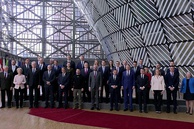
- The fact is that the present wave of economic and political protest in Europe, which is set to heat up, has clearly exposed what many had long suspected: EU nations are geopolitical dwarfs. Their predilection for making empty public gestures and hastily passing judgment on global conflicts has not been backed up by any real economic or political might, or by a concerted will.
- Geopolitics will remain, as it has always been, the domain of the United States, Russia, and China, which have demonstrated a far greater long-term ability than the Europeans to endure the burdens of economic hardship, including energy price fluctuations. Geopolitics requires patience, resilience, and sacrifice.
...This is an excellent and precise analysis of the processes currently unfolding in Europe. The only question is whether the European elites are truly unaware of the nature and root causes of the troubles now afflicting the territory under their watch - the western peninsula of Eurasia…
It seems that these elites had too much trust in the "end of history" theory and grew so complacent that, at this critical juncture - with the political ground shifting under their feet – the European leaders have completely lost their bearings. They now find themselves at the epicenter of a "perfect storm" of political, social, and economic crises that has engulfed Europe...
Konstantin Remchukov’s description of EU member countries as "geopolitical dwarfs" comes as a damning verdict on an arrogant, self-absorbed "old lady" Europe.
The views of the author are his own and may differ from the position of the Editorial Board.
read more in our Telegram-channel https://t.me/The_International_Affairs