РУССКИЙ
 11:12 23.11.2026 •
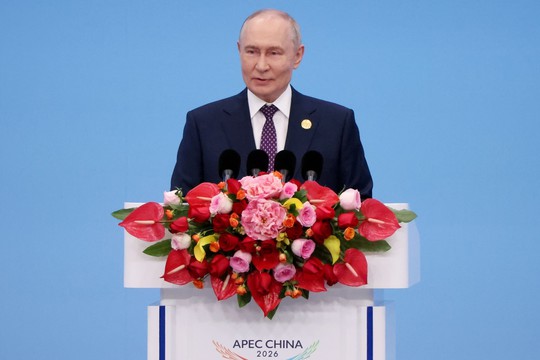
Vladimir Putin at the APEC CEO Summit
Photo: Kremlin.ru
The Shenzhen meeting only emboldened the Russian leader. Now Europe must lay the groundwork for serious diplomacy, Financial Times stresses.
Once upon a time, Donald Trump promised to “un-unite” Vladimir Putin and Xi Jinping, America’s two primary adversaries. But these days his philosophy is: if you can’t beat them, join them — for the first-ever trilateral summit.
The Shenzhen show was not about summoning the spirits of Yalta 2.0 or the emergence of a new illiberal axis. Nor was it about three responsible leaders sitting down for a sober discussion on guardrails for competition between countries with the world’s largest nuclear arsenals. Rather, it was another episode in a sickening series that could be titled “The End of the Collective West as We Knew It.”
The practical results of the photo op-heavy summit look negligible. Xi got a stage to rehash his favourite talking points and portray himself as a responsible leader while placating Trump and thus buying time for China to build leverage. Trump appeared happy simply to be sharing a table with Xi and Putin, talking about his favourite subjects like the need to prevent nuclear war and the alleged over-reach of the International Criminal Court.
Putin is the real beneficiary — and the rewards for him are more than symbolic. Throughout the summit and bilateral exchange with Trump, he has made sure that the US president refrains from putting any real pressure on Russia in the next few months — a timeline that is critical to understanding the Kremlin’s theory of victory.
First, Russia may be under increased strain, but it can still generate enough resources to support the war effort throughout 2027, including money, weapons and manpower. On top of that is his advantage in terms of long-range strikes. Despite Kyiv’s daring attacks on the Kerch Bridge and oil refineries, the damage Putin can unleash is greater. Russian strikes decimate the Ukrainian economy and tax base, thus inflating the bill that European capitals will need to foot.
Second, there is the political calendar in Europe. Mobilising resources for Ukraine is already challenging. It will become even more troublesome if Marine Le Pen wins the French election next spring. Putin therefore has no real incentive to engage in serious negotiations before summer, and even then there’s no guarantee of a window for a meaningful diplomacy. Since ongoing fighting continues to create leverage for Russia, Putin is unlikely to accept any ceasefire as a precondition for substantive discussions. Moreover, there is still the risk that Trump could make Ukrainian efforts even more difficult if he chooses to withhold critical US support.
The main problem for the Europeans, who held a duelling “coalition of the willing” summit on the same day in Berlin, is not only a stubborn and cunning opponent in the Kremlin who has swapped the pragmatic interests of his country for imperial nostalgia. Just as difficult is the problem of Trump and the lack of seriousness in his inner circle.
The predicament European leaders are facing is unenviable. While they need to secure a pipeline of support for Ukraine and insure it against political upheavals on the continent, they also need to engage in torturous diplomacy with Moscow — and in parallel engage Washington to stop Trump from accepting Putin’s narrative, and to pave the way for real negotiations when the window opens. The bandwidth of the leaders and their key advisers is likely to be consumed by day-to-day crisis management.
For this reason, it’s critical that Europeans allocate resources to think honestly and strategically about the future of the continent’s security and relations with Russia — something mostly neglected until recently — and try to forge a consensus on European security arrangements that both ensure Ukraine’s survival and reduce the risks of a wider war with Russia.
read more in our Telegram-channel https://t.me/The_International_Affairs