РУССКИЙ
 11:10 23.11.2026 •
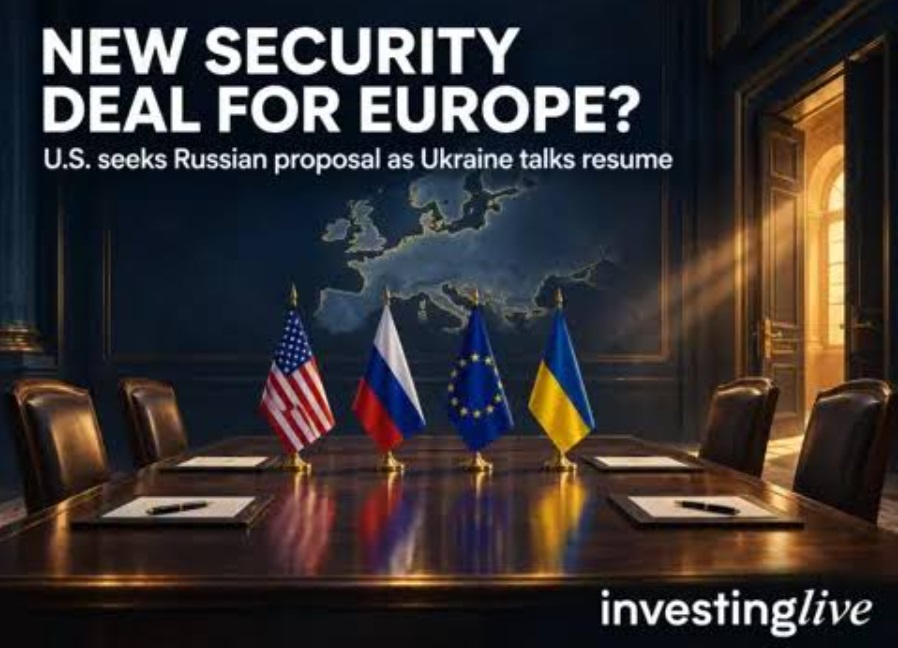
A revamp of Europe's security order has emerged as a new sticking point in U.S.-brokered talks to end the war in Ukraine. The United States has urged Ukraine and European countries to accept Russia's demand to build a new European security architecture, but the European Union (EU) opposes the idea, saying it could weaken the existing order. Russia, for its part, says it has never agreed to let European countries join the next round of talks. With Washington, Europe, and Moscow offering different visions, the path to a cease-fire is expected to be bumpy, ChosunBiz writes.
On the 16th (local time), according to the Associated Press and Reuters, EU foreign ministers met in Brussels, Belgium, and rejected Russia's call to create a new European security system. They also criticized Russia for striking Ukraine's power plants and other infrastructure while dragging out the talks, worsening civilian suffering in winter.
The split between the United States and Europe centers on the nature of the new security system Russia wants. The AP reported that after cease-fire talks last week in Abu Dhabi, United Arab Emirates, Washington urged Ukraine and its Western backers to accept Russia's demands, arguing a new European security framework could help clinch a deal.
European countries, however, see it as a bid to weaken the North Atlantic Treaty Organization's (NATO) military clout. They say it mirrors the security guarantees Russia proposed to NATO in 2021, before its full-scale invasion of Ukraine in 2022.
German Foreign Minister Johann Wadephul said, "Europe already has a security system," and stressed that every country must respect the existing one. Lithuanian Foreign Minister Kestutis Budrys also opposed creating a new architecture, saying, "The problem isn't the rules; it's Russia breaking them."
The United States and Russia also differ on whether European countries should take part directly in the talks. According to Reuters, Kremlin foreign policy aide Yuri Ushakov said, "What is under discussion now is to hold the next talks in a three-party format," adding, "An expanded format has not been agreed with us."
That reaffirmed Moscow has not agreed to Europe joining the next round, diverging from Washington's account. Earlier, U.S. envoys Steve Witkoff and Jared Kushner said after meeting President Vladimir Putin in Moscow that Europe would take part in the next talks.
Ushakov did not entirely rule out European participation. But he said the United States, Russia, and Ukraine may need one or more additional rounds of three-way talks. He stressed Europe must spell out what constructive contribution it can make.
Europe is stepping up efforts to join directly. At a summit in Dublin, Ireland, last week, EU leaders agreed to form a negotiating team made up of the national security advisers of France, Germany, the United Kingdom, Italy, and Poland, along with senior officials from key EU institutions.
Despite more than a year of U.S.-led mediation, the talks remain stuck without a clear breakthrough. Envoys Witkoff and Kushner have shuttled between Russia and Ukraine, but the sides remain far apart on territorial control and postwar security guarantees. They have not reached a durable cease-fire, and the only concrete progress confirmed so far has been prisoner exchange.
With no breakthrough on territorial control and postwar security, the talks now also face the tasks of overhauling Europe's security order and deciding who sits at the table. With no agreement on the core issues and new disputes over the agenda and participants, the negotiations are seen as likely to drag on.
read more in our Telegram-channel https://t.me/The_International_Affairs