РУССКИЙ
 10:40 15.10.2026 •

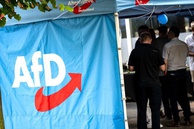
In Germany, the initial wave of emotional outbreaks is gradually making way for attempts to wrap one’s mind around the triumphant success of the right-wing populist "Alternative for Germany" (AfD) party in the parliamentary elections of three East German states, dubbed by the media as a “political earthquake.” The elections, watched closely not only by Germans but without exaggeration by the entire European Union and even Donald Trump across the Atlantic, reflected an urgent public demand for profound change in Germany. The ruling three-party coalition of the CDU/CSU conservatives and the Social Democrats, led by Chancellor Friedrich Merz, is clearly failing to reform the country – hence their crushing defeat. The fact that East Germans, shut, for the first time, CDU candidates out of one of their state parliaments (in Mecklenburg-Western Pomerania) is a clear sign of this. It also sends a message to Chancellor Merz himself: is it not time to change course and think about an early resignation? In any case, a recent opinion poll showed that nearly half of German voters expected Merz to do just that following such a political slap in the face - or rather, a resounding smack. Rumblings to this effect are already being heard in some of the Christian Democrats' grassroots organizations.
Yet, with emotions and media hype now receding, there is a growing need for a deeper understanding of the situation. What exactly has happened? The collapse of the "black-red" coalition in East Germany has hardly surprised official Berlin or the Chancellor himself. It was well known in advance that the election results would roughly mirror what the country witnessed after September 6 and 20. German pollsters rarely get it wrong, and there was no reason to expect a miracle. Week after week, multiple public surveys predicted the inevitable defeat of the Chancellor’s party and its Social Democratic partners in the state of Saxony-Anhalt, which is one of the country’s most economically depressed regions with an aging, low-income population and a lackluster economic climate. AfD politicians had long since sensed the prevailing local discontent with Berlin and actively employed it during their campaign. It needs to be admitted, however, that voters did not go 100-percent Eurosceptic. Rather, they clearly chose the most striking way to express their protest.
According to August forecasts by pollsters, the AfD’s success with their rating exceeding 40 percent - nearly double that of the CDU - suggested that if victorious, the right-wing radicals might even get a chance to govern the region entirely on their own. Alas, they fell just short of that mark. The elections in Mecklenburg-Western Pomerania, where the AfD had likewise been projected to lead by a wide margin, offered more surprises when in the final leg of the race the SPD almost caught up with the AfD, narrowing the gap to just 2.7 percent thanks to the Social Democrats' state leader and the region's Premier, Manuela Schwesig. She effectively saved the SPD’s reputation single-handedly, largely by publicly distancing herself during the campaign from the unpopular social reforms proposed by Merz and her own party’s leadership. Schwesig’s strategy paid off: while earlier in the month the SPD was polling just under 30 percent, and below 20 percent a year ago, their final result of 35.5 percent will now allow the Social Democrats to form a coalition with The Left and the Greens, thus letting Schwesig retain her post and keeping the AfD in opposition. Meanwhile, the CDU’s failure to clear the 5 percent threshold and enter the state parliament was a deeply painful defeat for the conservatives, although pollsters had indeed warned of such a possibility.
Notably, in a televised interview with ZDF aired on election day, Manuela Schwesig outlined two reasons why the AfD manages to gain ground, siphoning off votes from the other parties, including the SPD. "First, in my federal state, many people oppose support for Ukrainians - both financial and military - and the AfD actively built its election campaign around this," she said. "Second, many want gas supplies via Nord Stream to resume. We do not support either of these positions and realized we were losing votes because of it..."
The CDU performed best in the election to the Berlin House of Representatives, garnering 18.8 percent of the vote and placing second behind The Left party (25.7%) but ahead of the AfD (16.3%). However, it was not invited to participate in negotiations to form the city-state's government because the SPD and the Greens preferred to forge an alliance with the election winners, The Left.
In any case, the "black-red" coalition had time to brace for a heavy political blow and work out a public response strategy befitting the defeat. Naturally enough, they would express deep regret for the media, promising to draw lessons and correct mistakes, and seeking scapegoats. It is worth recalling that the German constitution does not allow local election results to be interpreted as a referendum on the Chancellor and his cabinet. Furthermore, the fact that a worried Merz canceled a long-planned trip to the UN General Assembly session to discuss the situation within his party should not fool anyone, as he had already made up his mind and had no intention to step down. Right after the defeat in Saxony-Anhalt, but just days before the elections in Berlin and Mecklenburg-Western Pomerania, all eight CDU state premiers hurriedly issued a statement publicly backing the Chancellor. The state leaders urgently called for an end to internal party debates regarding personnel. They argued that voter trust could be regained not by discussing leadership changes, but by addressing specific problems, and emphasized their intention to continue working alongside the incumbent Chancellor.
Essentially, from that moment on, any grassroots discussion within the Union about the extent to which federal policy – and the Chancellor himself -were dragging down the CDU’s regional election results lost any sense. That is simply how German politics works. Even the fact that the CDU had, for the first time in the history of the Federal Republic, lost all their seats in a state parliament failed to trigger a shift within the party. Immediately following the CDU executive committee’s meeting on the evening of September 20, after the results of the Mecklenburg vote in Schwerin had arrived, Merz acknowledged the outcome as a "catastrophe" but promptly declared his intention to continue "pushing forward with reforms" as Chancellor. He had coordinated every word of his brief speech with close associates and read it from a teleprompter; journalists were not permitted to ask any follow-up questions. It was a statement designed to settle the matter once, and for all. "We will carry on as before, only better"- that was his core message. Just how exactly things would improve remained anyone’s guess though. An intriguing detail: according to sources at Die Zeit and Table.Briefings, the text of Merz’s address had been prepared days in advance. This further suggests that he had decided to retain his posts as Chancellor and CDU chair regardless of the election outcome. Therefore, the "crocodile tears" shed by the “conservatives” regarding a review of past mistakes should not be overstated; the push for change in Germany is likely to remain within the boundaries previously set by Merz.
At a news conference on September 21, the Chancellor reiterated the "unshakable nature of the governing coalition," despite the election results in the East. He also lauded the SPD for “making clear" its intention to continue working in government alongside the CDU. It appears, however, that from now on there will be some new people working with Merz. Just as this article was being prepared, reports came about the sudden voluntary resignation of SPD co-chair and Federal Minister of Labor and Social Affairs Barbel Bas. The reason cited was personal: the loss of a loved one. That same day, October 12, the SPD executive committee announced that a federal party congress would be held at the end of the year, where the party’s entire leadership would be re-elected as proposed by Vice-Chancellor Lars Klingbeil. The likely candidates for the new SPD leadership are Defense Minister Boris Pistorius and the earlier mentioned Manuela Schwesig, the Minister-President of Mecklenburg-Western Pomerania. The overall impression is, however, that the new SPD representatives will hardly manage to bring a greater sense of harmony or calm to the ruling coalition.
Marcel Fratzscher, head of the German Institute for Economic Research, is skeptical about the future prospects of a Merz-led cabinet. "It will now be even harder for the federal government to mobilize political support for implementing a program of fundamental reforms," he predicted. "If the CDU/CSU and the SPD continue to stick to their 'red lines,' political paralysis will worsen, economic weakness will persist, and the likelihood of an 'Alternative for Germany' victory in 2029 will increase further," Fratzscher told Reuters. Gordon Schnieder, the Chancellor’s fellow party member and Minister-President of Rhineland-Palatinate, also emphasized the urgency of economic reforms: "It is imperative to achieve sustainable improvements for the country. Only policies that address people's problems can restore trust." Klaus Holetschek, leader of the Christian Social Union (CSU) parliamentary group in the Bavarian state parliament, also urged Merz to move faster: "He must act immediately - the window of opportunity is narrowing, and the pressure is mounting."
Meanwhile, Friedrich Merz faces a new headache in Saxony-Anhalt, where a right-wing radical has been elected head of the state parliament for the first time in post-war history. The problem is not merely that an AfD representative, Tobias Rausch, got the job - that was expected - but rather the number of votes cast for him in the secret ballot. A real mystery unfolded there, which directly affected the CDU's reputation. The local Christian Democrat parliamentary group had decided to abstain from the vote. It turned out that 48 votes had been cast for Rausch, 29 against, with five abstentions. Preliminary estimates suggested, however, that he could garner maximum 44 votes - the combined total secured by the AfD and Sahra Wagenknecht’s left-wing populist party, the BSW, which had earlier declared its support for Rausch. In an ensuing scandal questions were asked about where those four extra votes for the "Alternative" politician had come from? Since the vote was secret, who else had voted in his favor remains anyone’s guess. There were suspicions that some CDU deputies had also voted for Rausch thus supporting a representative of a party whose Saxony-Anhalt branch is officially and emphatically classified by the local branch of the Federal Office for the Protection of the Constitution as a "confirmed right-wing extremist organization." If this is exactly what happened, it means that the notorious "firewall" has once again developed a deep crack.
CDU General Secretary Franziska Hoppermann called Rausch’s election a "serious blow" to the party. Friedrich Merz said that such a scenario was "incompatible with CDU values" but warned against “jumping to conclusions." He suggested the possibility of a "false-flag operation" by lawmakers from other parties meant to discredit CDU MPs. For the conservatives, the emergence of secret defectors essentially amounts to a party crisis. The gravity of the situation is underscored by the fact that the CDU parliamentary group in the state legislature is on the verge of a split with some members having expressed dissatisfaction with their leader, Sven Schulze, and considering leaving the caucus to form their own parliamentary group.
The scandal has also erupted at the federal level with coalition partners in the Bundestag demanding explanations from the conservatives. The SPD parliamentary faction even held a mass march in central Berlin to protest the election of an AfD representative to a state office.
The CDU/CSU and SPD coalition committee discussed Rausch’s election during a four-hour meeting, after which participants declared their "firm intention not to abandon our country to extremists." Elections for the Minister-President of Saxony-Anhalt are slated for December in Magdeburg. Ulrich Siegmund, the main AfD hopeful, intends to run, even though his chances are slim. A number of Bundestag deputies have demanded that Merz, as CDU chairman, make sure that "not a single vote from his party goes to" the AfD. Meanwhile, Sahra Wagenknecht has called to abandon the "firewall" policy and said she might cooperate with the AfD on certain issues. It is important to note, however, that although the AfD and Wagenknecht’s party are essentially polar opposites, they share a positive attitude toward Russia, a pragmatic understanding of the need for Germany to normalize relations with Moscow, and a desire to remove barriers to resuming economic cooperation. Like the AfD, the BSW opposes the EU’s anti-Russian sanctions policy and the massive outlays on military support for Ukraine. The parties also share a sharply critical stance regarding the waves of migrants who have arrived - and continue to arrive -in Germany.
Even before the elections, the German business community warned about the threat posed by votes cast for the far right. They implied that, under a potential AfD administration, none of them would risk their capital in the region, which would bring about a near-total halt in investment in the country’s economy. That being said, it should be noted that German business’ critical attitude toward the AfD should not be viewed as a gesture of unconditional support for the Merz government. On the contrary, the more they fear the AfD’s strengthening positions, the more insistent they are in their demand for reforms from the federal government to address the root causes of the protest vote. If the Merz cabinet fails to provide tangible results, mere warnings about the "risks" associated with the AfD will not be enough to restore confidence. The Merz cabinet is trying to counter the negative political backdrop by showcasing the country’s industrial, technological, and investment potential. An "Invest in Germany" summit, scheduled to open in Berlin on October 19, aims to attract international investors. According to The Financial Times, executives from Goldman Sachs and BlackRock have been invited to attend. This will put Merz to a hard test as both foreign and domestic investors need more than just glossy presentations to assess the cabinet's actual ability to implement reforms, maintain regulatory predictability, and ensure political stability.
One thing is clear for now: Friedrich Merz has retained the chancellorship, but it is increasingly difficult to dismiss the results of the September elections in the East as merely an ordinary, unpleasant defeat for the ruling party. The conditions that the ruling coalition operates in have changed significantly as both the public and the business community are expecting swift and tangible results. Therefore, the current situation can be described more accurately not as the impending end of Merz’s chancellorship, but as a crisis of governance and trust, a situation where the electoral success scored by the AfD, internal divisions within the CDU and SPD, and economic hardships reinforce one another. What happens next now depends not only on whether Merz remains chancellor, but also on whether his government and the German political establishment as a whole, can be clear-eyed about the unfolding global economic and geopolitical shifts and draw the right conclusions. And the support for the Kyiv regime, which is draining the economy, certainly plays a significant role here.
The views of the author are his own and may differ from the position of the Editorial Board.
read more in our Telegram-channel https://t.me/The_International_Affairs