РУССКИЙ
 10:56 22.07.2026 •

A Western political scientist once said that when the EU and NATO start talking about "European unity" over and over again, it means cracks are already appearing somewhere beneath the foundations of that unity. The current fuss over this issue is all too obvious. Last week, global news agencies exploded with breaking news: units of the German Bundeswehr would participate for the first time in France's flagship nuclear exercise, Poker, slated for this fall. The news was presented as a major sign of closer Franco-German cooperation on nuclear deterrence amid doubts about US President Donald Trump's commitment to Washington’s obligations under the NATO treaty.
The upcoming war games were among the main topics of the July 17 meeting by the Franco-German Defense and Security Council at Nörvenich air base Germany, attended by Chancellor Friedrich Merz and President Emmanuel Macron. Furthermore, amid the current militaristic hysteria in Europe, the participants discussed long-term plans for missile defense, satellite reconnaissance, and European long-range weapons as a future alternative to US Tomahawk missiles.
"We want to give new impetus to forward deterrence, early warning, deep strikes, and shared capabilities," Macron told reporters ahead of a working dinner with Merz, when outlining joint plans as part of a "strategic awakening" of a previously dormant Europe. Macron reiterated France’s previously stated willingness to provide EU countries with a "nuclear umbrella" of their own by deploying French nukes in certain countries.
The two leaders later discussed their bilateral cooperation in greater detail in the historic German town of Brühl near Cologne, during a meeting there of a Franco-German Council of Ministers. The agenda of that meeting was unusually broad too, covering promising technologies such as artificial intelligence, microelectronics, and nuclear fusion, as well as energy issues such as expanding the hydrogen corridor. Merz and Macron also plan to hold a space summit in Paris to discuss among other things the now-traditional topics of Ukraine and the Middle East.
The irony of all this was not lost on the journalists, who openly hinted that Macron and Merz were obviously in a rush to complete these tasks before next year’s presidential elections in France, just nine months away from now. "Just how much will be accomplished by then is a big question though, especially given that Macron is already a lame duck, and Marine Le Pen is threatening to scrap many projects," Politico opined. This threat has indeed increased after the French Supreme Court allowed Le Pen, despite her criminal record, to run as the leader of the far-right National Rally (RN), which, according to pollsters, has very good chances to score a major win. The current French and German leaders predictably denied media allegations, explaining their haste as a means of ensuring the EU's economic survival in these difficult times, rather than an attempt to protect Franco-German relations from Marine Le Pen’s presidency. When briefing reporters following their talks, Macron and Merz announced that they were accelerating work on agreements to combat the Chinese export glut, finalizing the EU's next seven-year budget, and beginning to establish a US-style capital markets union with other EU countries.
However, maintaining present relations between France and Germany under a likely far-right French president could prove a really challenging task. Le Pen and her RN party have historically criticized the Franco-German partnership, despite that fact that her ally Jordan Bardella sent pragmatic signals to Berlin earlier this year when he was the party’s potential presidential candidate. Le Pen is also skeptical about the idea of deploying French nuclear weapons in other countries, and has previously stated that any such move should be conditional on the purchase of French weapons by those countries. She also intended to withdraw France from NATO's unified command, just as President Charles de Gaulle did in 1966, retaining France’s membership only in the Alliance's political structure. (Paris rejoined NATO's military component in 2009 under President Nicolas Sarkozy.) Notably, during the years of so-called dédiabolisation -"de-demonization"- the party has significantly altered its public strategy with many provisions previously perceived as signs of radical Euroscepticism having disappeared from its platform. The rejection of the idea of leaving the Eurozone, a more cautious rhetoric regarding the European Union, and an attempt to speak not in the language of political protest but in the language of public administration - all this demonstrates a conscious effort to transform the party from a force of dissent into a force aspiring to power. Attributing this to Le Pen’s personal evolution alone would be a mistake, though. What is far more important here is the changing political environment she operates in.
That being said, if Le Pen wins next year’s elections, her policies would represent a significant break with those of President Macron, who once floated the idea of creating a European army within the EU and advocates strengthening pan-European defense capabilities all across the board, from procurement to multinational arms programs and the inclusion of allies in France's nuclear deterrent. Will this militaristic psychosis end when Macron is gone? It is well known, however, that the National Rally has no intention of drifting toward pacifism. Moreover, this far-right party wants France to have a larger and more powerful army than it currently has, but only on their own terms. Moreover, the RN’s leadership has no desire to break off relations with the North Atlantic Alliance. Moreover, the party has in recent years emphasized a commitment to collective defense and the preservation of French nuclear potential as a key element of national security. At the same time, the RN consistently embraces the principle of the so-called defense sovereignty where Paris independently determines the limits of its participation in military operations, protects its own defense industry, and avoids decisions that limit the country’s political freedom of hand.
During this month’s parliamentary debates on France's updated military planning law, Le Pen's party introduced nearly 100 amendments detailing how the far right would tackle defense-related issues if their candidate became president. Along with anti-Brussels rhetoric, the amendments included calls for increased defense outlays compared to what the government had proposed. This means that if elected, the RN intends to continue Macron's efforts to ramp up military spending.
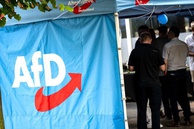
In addition, the party’s MPs have softened their anti-NATO rhetoric. For example, they did not support amendments proposed by the far-left "France Insoumise" party, which called for France’s speedy withdraw from NATO's joint command. The National Rally party does want an early exit, but only after the war in Ukraine is over. The Lepenovites recognize that France currently plays a leading role in NATO, and that leaving its military structure would reduce the French army’s operational integration with allied forces. In theory, this sends a reassuring signal to Brussels, which is equally worried about Germany amid the sharp rise in popularity of another far-right party, the Alternative for Germany (AfD). Right now, this is about the AfD's expected success in regional elections, but federal elections will be just around the corner.
The recent advance of the European right is becoming a growing headache for both EU and NATO leadership. European politics was long built on an unspoken social contract where citizens agreed to transfer increasing powers to Brussels in exchange for economic well-being, stability, and security. As long as living standards were rising, this model worked almost flawlessly, but now, following the pandemic, amid rampant inflation and economic problems, an energy crisis, and growing military spending, this model is failing and European voters are looking for new solutions.
For Europe's political elites, the growing multi-billion-dollar outlays on energy compensation and defense programs, modernization of their armed forces, support for Ukraine, refugee reception, and so on seem to be a deliberate geopolitical choice aimed at inflicting a "strategic defeat" on Russia, just as they have repeatedly stated. Not so for the masses of voters, though. The average Frenchman, German, or Belgian worries not about geopolitics, but about rising utility bills, business closures, and cuts to social programs. Rightwing parties offer society a simple explanation for what's going on. It does not answer all the questions, but it easy to understand. They argue that the problem is not geopolitics, but the fact that European countries are gradually ceasing to belong to their citizens. The central argument of the new European rightwing wave is not about immigration, as is commonly believed. It is about sovereignty. The sovereignty of the national parliament. The sovereignty of national industry. The sovereignty of one's own army. Even the sovereignty of national identity. The right is a sovereigntist party.
It is no coincidence that Marine Le Pen has abandoned most of her previous emotional anti-Brussels rhetoric. Instead of calling for France to leave the EU, she is now speaking about the need to "bring back France's right to make its own decisions." The leaders of the Alternative for Germany (AfD), Austria's Freedom Party (FPÖ), Geert Wilders's Dutch Party for Freedom (PVV), and a bunch of other rightwing forces stick to an almost identical language. It may seem that there are significant differences between them. The French right advocates increased military spending. The German AfD is much more cautious about rearmament. The Italian government of Giorgio Meloni, despite its nationalist-conservative rhetoric, demonstrates strong loyalty to NATO. What unites them, however, is not their attitude toward Russia or even their views on Ukraine. What unites them is their attitude toward the very model of European integration. The new right-wing wave proposes a formula that is directly opposite to the EU's previous imperatives: a strong Europe is possible only with strong nation-states. This debate may seem academic, but it is precisely the cause of the largest political confrontation now unfolding in Europe.
EU and NATO leaders are fully aware of this new problem: tanks are built faster than political trust. When Brussels discusses the latest military aid package for Ukraine or the prospects for European rearmament, the conversation increasingly goes beyond the familiar military agenda. Just a few years ago, the generals’ interest in the outcome of parliamentary elections in France, Germany, or the Netherlands was limited only to the formation of new cabinets. Today, the situation has changed: the political calendar of European countries is gradually becoming a factor in the Alliance's strategic planning. Today’s main challenge for Europe is not Russia, China, or even the United States, but the polling booths of Paris, Lyon, Lille, Dresden, Magdeburg, Leipzig, and dozens of other cities. European voters are beginning to vote differently from how they did just twenty years ago. In most EU countries, protest voting now is not so much in support of a single ideology as it is against the established decision-making mechanism. For a significant number of voters, Brussels has become a symbol of the distance separating European institutions from the daily lives of citizens. In this atmosphere, the success of far-right parties, only recently considered marginal, comes as a result of pent-up public discontent, not a sudden, unconscious ideological shift to the right.
It is precisely this shift that not only the European Commission, but also NATO headquarters in the Brussels district of Evere are now getting nervous about. The reason is not the hypothetical withdrawal of this or that country from NATO. Such a scenario remains unlikely. What is more important is that each new victory for sovereigntist parties makes collective decision-making much more difficult. Today, the debate is no longer about the number of missiles and the content of sanctions. It is about who exactly should decide where and how many of these missiles will be sent, and specific restrictions in these sanctions individual countries disagree with. Brussels or Paris? Brussels or Berlin? The European Commission or the national parliament?
History knows many examples of powerful alliances folding up not as a result of lost battles, but because they had ceased to understand the meaning of their own existence in the same way. This is probably the question that is now beginning to worry Europe today and irritate Brussels much more than the latest reports from the line of contact in Ukraine. Because the war will inevitably end, but the debate over who will determine Europe's future -Brussels or national capitals - is only just beginning. It is not that "Europe is going right," but that its political landscape is changing fast. This is an important distinction, because Europe has ceased to automatically trust the former centrist elites.
Therefore, the simplistic formula "the rise of the right will weaken NATO" looks a bit inaccurate. If we imagine a change of power in France, it would lead not only to the dismantling of alliance commitments, but to protracted and complex negotiations over the redistribution of powers within the Western community. For Washington, this would mean having to take into account the more insistent demands of its European allies. For Brussels, it would mean finding a compromise between integration and the preservation of national prerogatives. For the Alliance itself, this means a transition to a model where political unity no longer automatically translates into unity of strategic approaches. This is precisely why elections in France and Germany are no longer a matter for these countries alone. Their results are being closely studied not only by the European Commission but also at NATO Headquarters. An overarching question is whether future governments will be able to maintain the previous level of political consensus within Europe on security, defense, and relations with Washington.
Macron talks about European strategic autonomy. Merz speaks about the need to make Germany the leading force in European defense. Le Pen emphasizes restoring national control over key security decisions. The wording varies, but lying behind it is the same question: what should NATO's European component look like in the near future? This is no longer a debate between supporters and opponents of the Alliance. It is a dispute over the various models of this debate. Political elections in France and Germany are becoming part of this very process. Voters are casting their ballots for different parties, but NATO generals, European diplomats, and strategists interpret these election results differently. For them, every percentage point gained by the RN or AfD does not so much indicate the popularity of certain politicians, as it demonstrates a gradual shift in public expectations. A shift that is forcing traditional parties to rethink their agendas, and European institutions to seek new forms of political compromise. I see this as the main intrigue of the current moment. Although Europe is not yet turning its back on the North Atlantic Alliance, it is increasingly trying to redefine its own role within NATO, and perhaps even beyond it. It is precisely this slow, sometimes indiscernible, reassessment of the familiar rules of the game that in the medium term may prove far more significant than the loudest election slogans.
The views of the author may differ from the position of the Editorial Board.
read more in our Telegram-channel https://t.me/The_International_Affairs