РУССКИЙ
 11:32 24.11.2026 •
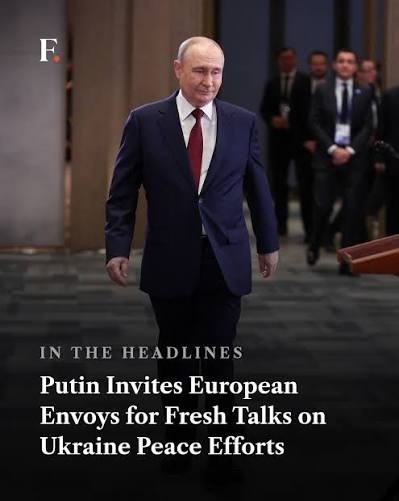
Some European leaders wanted a superhero negotiator to take on Vladimir Putin and Donald Trump, secure a fair peace deal for Ukraine, and safeguard the continent’s own security, as ceasefire talks gather pace.
They were never going to find one.
That had already become the view of diplomats and officials close to the discussions, granted anonymity to comment on the sensitive Ukraine peace process that’s dividing opinion in European capitals, even before the EU decided on Friday that it would have to be a team effort, POLITICO writes.
The push to identify one representative to speak for Europe was understandable. The appeal of having a single, respected leader taking the reins is largely based on a desire to project European strength and unity — as well as an interest in making negotiations with Russia, the U.S. and Ukraine efficient and effective.
Zelenskyy himself said this week he wanted Europe to identify within days who will take its place in the talks, and suggested he’d prefer it was one person (he even indicated that he had a preference, though would not reveal a name).
He didn’t get his way. Instead, leaders at a summit in Dublin on Friday, decided that the “E5” made up four big EU countries ― Germany, France, Poland and Italy ― and the U.K., plus officials from the European Commission and Council, would take the work forward as a team.
Technical discussions
The search for a top representative to fill Europe’s seat at the negotiating table at the next round of peace talks had become a political obsession in Brussels that missed at least two big points.
The first is that the leadership level is not currently where the negotiations are at. Talks this week in Abu Dhabi were technical discussions between senior officials.
If these officials make progress toward a deal, leaders will no doubt want to get involved. Ultimately, it will be leaders who sign any peace agreements that follow — and there’s no limit on the number of EU presidents or prime ministers who could join such a meeting as signatories or guarantors of the final deal.
‘Not a superstate’
The second point some member states and Brussels insiders were missing is structural: There are just too many European stakeholders with equally important but very distinct interests and remits, making consolidation of all the different strands under one person impossible.
The Commission can’t negotiate Europe’s future security architecture — that’s for NATO members and national capitals to decide. But equally NATO, Paris and Berlin cannot negotiate EU sanctions or Ukraine’s accession to the bloc — these are in the Commission’s remit.
And the idea that the “E3” — Europe’s big economic and military beasts of Germany, France and the U.K. — would let either the Commission, the European Council or NATO do it all on their behalf is not realistic.
As one EU diplomat put it: “The reason why Europe hasn’t found one person who can represent the whole of Europe is that Europe is not a superstate.”
In the context of the Ukraine talks, European interests encompass many EU member states but also countries like the U.K., and Norway, as well as Turkey and Moldova, the diplomat said. “Who can promise troops on the ground on behalf of the rest of Europe? Who can offer billions in financing? It’s difficult.”
The conclusion some officials involved in the Abu Dhabi process reached was that Europe would have to be represented by a team, much as it has been already, albeit at one step removed from the main negotiating room so far. Different members of that team will own different issues.
Timing is still everything
The first thing to resolve will be on the sequencing of the negotiations — most significantly, when should Europeans allow themselves to discuss Russia’s demand to overhaul regional security? This is a critical and potentially existential question for European countries. And it is already a subject on which top EU officials are weighing their positions with care.
Those close to the talks believe a clever way can be found to offer Russia a conversation about regional security as part of careful sequencing of the negotiations, without binding the issue completely into the final peace agreement for Ukraine.
But different EU spokespeople are saying different things on this sequencing point, in what is either a clever strategy, or a sign of continuing disarray.
But in Abu Dhabi, EU officials signaled their readiness to allow parallel tracks in the talks, so Ukraine’s peace settlement and Europe’s future security structures could be discussed at the same time.
Officials in national capitals also agree that the “sequencing” of the negotiations on this point is key. Behind the scenes different countries and factions have different views on what the right strategy should be, just as they struggle with the question of whether it’s right to engage directly with Putin at all.
And of course the question of Europe’s role may yet be moot.
read more in our Telegram-channel https://t.me/The_International_Affairs