РУССКИЙ
 11:30 24.11.2026 •
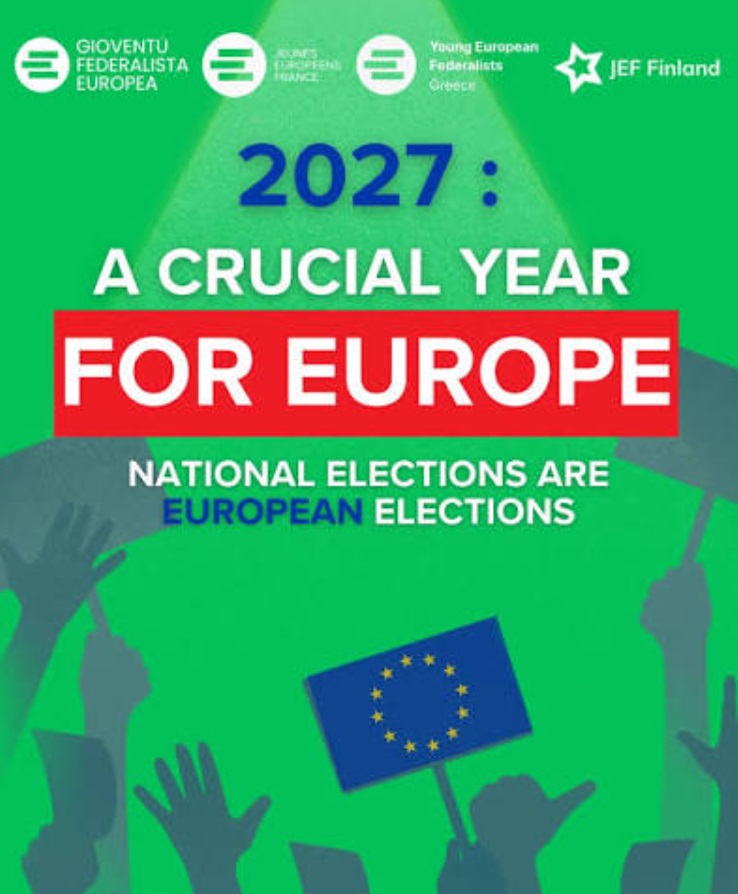
Between the end of this month and the end of next year, an extraordinary electoral sequence will sweep the bloc. Voters in four of the EU’s five biggest member states, by population and economy, head to the polls, with parliamentary elections also due in Estonia, Finland, Greece and Slovakia, and regional ballots in Germany, The Guardian writes.
Spain kicks off the cycle with a snap general election on 29 November, with prime minister Pedro Sánchez’s socialist coalition facing probable defeat to rightwing parties in the shape of the conservative People’s party (PP) and far-right Vox, which already govern together in some Spanish regions.
Next come presidential and parliamentary elections in France in the spring. The clear frontrunner in the presidential race is Marine Le Pen of far-right the National Rally (RN), well ahead of the far-left firebrand Jean-Luc Mélenchon and a hopelessly divided mainstream opposition.
When Poland votes later next year, nationalist parties that between them command nearly half the national vote could well unseat the liberal coalition of prime minister, Donald Tusk, despite recent splits. And in Italy, Giorgia Meloni, whose Brothers of Italy party has far-right roots, hopes to secure a second term in elections due before the end of 2027 – while facing pressure on her right flank from the upstart National Future party.
National specifics
All elections differ and national specifics loom large. But analysts agree the underlying forces at work here are connected: sluggish growth, ageing populations, strained public finances and a spiralling cost of living have chipped away at support for Europe’s traditional catch-all centre-left and centre-right parties. The wave of youth-led protests sweeping Europe is only the most visible sign of deep voter discontent.
Meanwhile, nationalist parties have become increasingly adept at conjuring and exploiting an ever-evolving list of supposed threats and crises, from migration and vaccines to the green transition, support for Ukraine, globalisation, international elites and supranational institutions – narratives bolstered by Russian disinformation and overt backing for “patriotic” parties from Donald Trump’s White House. As a result, politics has fragmented, and polarised: nearly one in four voters now backs far-right parties – a share that has grown almost fivefold since the mid-1990s.
The rise has not been linear: over the past year or so, while the far-right Alternative für Deutschland scored a historic regional election victory in eastern Germany, in the Netherlands Geert Wilders’s Freedom party lost nearly a third of its seats, Viktor Orbán’s Fidesz was soundly beaten in Hungary and the far-right Sweden Democrats shed support for the first time in 16 years.
But the underlying upward trend appears clear – fuelled above all, political scientists argue, by the normalisation and mainstreaming of far-right ideas, most notably on immigration. Centre-right parties are gradually dismantling “firewalls” that once barred cooperation with the radical right. At the European level, the centre-right European People’s party has increasingly turned to farther-right groups to roll back parts of the European green deal and tighten migration rules.
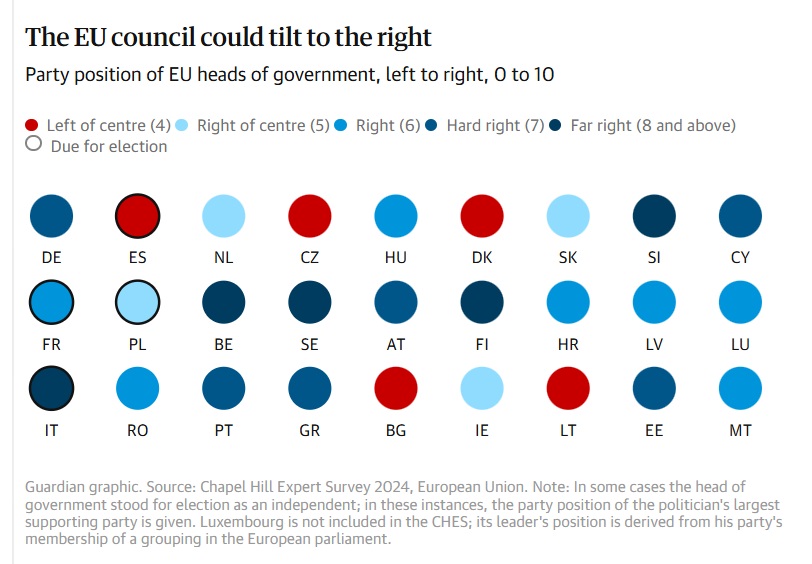
Safety in numbers, notes Tocci, could change current leaders’ behaviour in the council. Meloni’s relative restraint has been dictated, in part, by her relative isolation among mainstream peers such as Tusk, Sánchez and France’s Emmanuel Macron (alongside Rome’s reliance on €200bn in EU recovery funds).
If she were instead sitting down with the likes of Le Pen, Poland’s far-right Law and Justice (PiS) leader, Jarosław Kaczyński, and a Vox-backed Spanish government, with National Future’s hardline Roberto Vannacci breathing down her neck at home and those EU funds winding down, she might have less incentive to play pro-EU ball.
Three decades on from 1998, Europe’s coming elections, concluded Stefan Lehne of the Carnegie Europe thinktank, could well turn into “key tests of the EU’s resilience”. The threat to the bloc might not be immediate or existential, he said, but the medium-term risks were significant.
read more in our Telegram-channel https://t.me/The_International_Affairs