РУССКИЙ
 15:37 24.11.2026 •
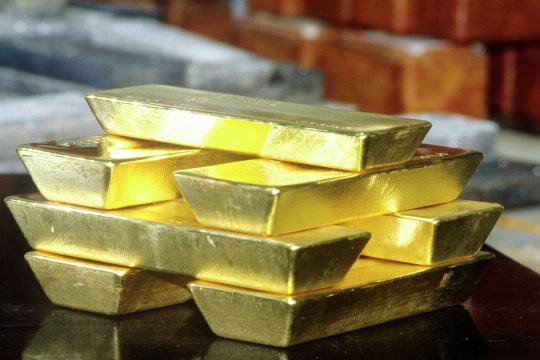
“Gold is money. Everything else is credit.”
J.P. Morgan, American banker and financier who saved the US from collapse by restoring its gold reserves
GOLD entered 2026 confidently, setting new all-time highs. From January 2025 to January 2026, it rose by 80%, reflecting tectonic shifts in the global economy and financial system.
Gold Records
IN JANUARY 2026, Robert Kiyosaki, author of the famous bestseller Rich Dad Poor Dad and an unconventional investor, published a new forecast for the price of an ounce of gold: $27,000.
Meanwhile, metal prices reached the previously unimaginable $5,000 per troy ounce. This fulfilled his previous forecast from 2023, which he justified with the following words: “[T]he Fed will be forced to churn out billions of counterfeit money. By 2025, we will see gold at $5,000, silver at $500, and Bitcoin at $500,000. Faith in the US dollar will be destroyed.”1 (Granted, he may have been a bit overzealous about the cryptocurrency.) Therefore, his stated growth target of $27,000 should no longer evoke smiles of disbelief.
However, if the events and factors mentioned below transpire, gold could reach $50,000, or even $100,000 per ounce (although this could be a different dollar, with different purchasing power).
I would call this phenomenon a “Golden Swan” - a reference to the “Black Swan,” a term coined by Nassim Taleb that symbolizes the breaking of stereotypes about the impossible: rare, unpredictable geopolitical and economic events with enormous global impact. In our case, everything will revolve around gold. A loss of faith in the dollar and all its associated financial derivatives (government bonds, stock instruments, indices) would drive capital into the precious metal as a refuge from the storm approaching from the US - a new financial crisis driven by unsustainable debt, unpredictable geopolitics, and an impending recession. At the same time, gold tokenization could once again, as in the good old days, make gold a universal and convenient means of payment. Amid tightening supply and colossal demand, the price of the precious metal could experience a dizzying surge and stabilize at a new equilibrium - a “global gold standard 2.0.”
The speed at which such seemingly fantastic figures can be achieved depends on the pace of reform of the global financial order toward reducing the share of the dollar in international settlements (it has already fallen to 57%) and global reserves (40%, a 20-year low).
Elon Musk: The Global Balance of Power Is Shifting
THIS process intensified in 2025 and was reflected in an explosive rise in the value of real, eternal money: gold and silver (gold doubled in price in a year, while silver more than tripled).
Put in perspective for the average person, a troy ounce is a thin sheet of gold about the length of a pinky finger and weighing just over 31 grams. It is hard to imagine it being worth $100,000 in the foreseeable future. A parallel is Bitcoin, which recently reached this price point, starting from scratch and with absolutely no tangible backing.
What do these two seemingly disparate assets have in common?
First, there is growing global demand and shrinking supply. Physical gold cannot be printed like the dollar and other fiat currencies; its natural reserves are limited, and the cost of mining and processing, similar to mining the leading cryptocurrency, is becoming increasingly expensive. For example, by the second half of 2025, the average allin sustaining cost (AISC) of gold production had already exceeded $1,500 [per ounce].
Other significant factors driving gold prices include the following:
- Declining resource availability. It is becoming increasingly difficult to identify commercially high-grade gold deposits, especially in the face of increasingly stringent regulations and increasing environmental and social requirements. Since 2023, not a single new large gold deposit (over 2 million ounces) has been discovered globally. This could serve as an indicator of a looming sharp decline in supply and the development of a long-term bullish supercycle for the precious metal.
- Increasing labor and material costs, i.e., operating costs in the mining sector.
- Increasing royalties and taxes as the basis for local budgets, taking into account the gold mining industry’s corresponding image. At the same time, as metal prices rise, their specific burden on gold mining companies’ finances increases proportionally.
- Increasing capital expenditures. As mines deplete, significant investments are required to maintain production and extend their lifespans, ensure safety, implement environmental reclamation projects, etc.
- Climatic and geographical challenges. Significant volumes of new reserves are located in areas with extreme weather conditions: temperatures below -50°C, permafrost and icy zones, and challenging terrain. All of this significantly increases the cost of extraction and requires investment in specialized technologies, equipment, and logistics.
- Power capacity shortage. Many fields lack access to power grids, requiring the costly construction of stand-alone power plants or the use of diesel generators, which significantly increases production costs.
In addition to the “internal factor” of production costs, a “perfect storm” is brewing around gold that could push prices higher in the short term to $6,000-$7,000.
The main external factors conducive to gold growth include:
The global nature, permanence, and unpredictability of geopolitical risks. The US is conducting a military operation against Iran. A conflict with China over Taiwan is looming. As a result, there is increased demand for relatively risk-free safe-haven assets. Gold has historically been the most versatile and convenient instrument in this regard.
A significant and prolonged weakening of the dollar (between January 2025 and January 2026, the Dollar Index fell by 12%, while the US currency depreciated by more than 25% against the ruble) occurred amid the Federal Reserve’s long-term monetary policy easing cycle and was driven by Trump’s policy of allowing the US currency to “float freely” at a lower exchange rate - viewed as the top priority for boosting US exports, balancing trade, and revitalizing the US real economy.
De-dollarization of global reserves. Following the precedent of freezing Russian government assets, the outflow of US bonds and other fiat instruments in favor of precious metals by central banks in developing countries has accelerated, growing by 6% in December 2025 alone. Currently, the total volume of accumulated global government gold reserves has grown to 36,500 [metric] tons, equivalent to almost $6 trillion at current exchange rates. At the same time, the total volume of Treasury bonds held by foreign holders at the end of 2025 amounts to approximately $9.36 trillion, indicating an increasing share of gold in the structure of global savings interest.
The Chinese factor. According to some estimates, the Chinese Central Bank is buying up over 30% of the physical gold released onto the market. For example, Russia supplied a record 10 tons of the precious metal to China in December 2025 alone.
In January 2026, Chinese President Xi Jinping declared that the yuan should become one of the new reserve currencies and means of payment. Fiat money is based solely on faith in it and the value it can buy; and in today’s reality, this faith is best supported by physical reserves of gold. In this context, too, things are looking bad for the dollar.
The prospect of launching a mechanism for yuan convertibility - including into gold and silver - is taking shape, implying that the Chinese currency would be backed by gold. This will lead to increased competitiveness with the Western financial system and could significantly undermine the dollar.
At the same time, China holds significant leverage over gold and dollar prices - namely, its holdings of $682.6 billion in US Treasury bonds (down from $1.2 trillion in 2018).
The India Factor. India is keeping pace with and in some ways is even ahead of China in its pursuit of a new gold standard. Its national gold reserves are relatively small: 880 tons.
However, according to some reports, the Indian population has accumulated a record 34,600 tons of gold (Indian temples hold 4,000 tons), exceeding the combined gold reserves of the world’s largest central banks. Another indirect blow to the dollar occurred on April 1, 2026. From that day on, the Indian government ordered banks to offer loans to the public secured by physical silver, which will be valued at a ratio of 1:10 to the weight and price of gold!
Thus, India is on the path to introducing a bimetallic standard, which could make the rupee a regional and, in the future, a world currency for settlements and accumulation backed by precious metals.
Gold’s status has risen from that of a safe haven from inflation risks and low rates to a strategic defensive asset amid global economic fragmentation, rising geopolitical and systemic risks, lost confidence in the dollar and other global fiat currencies, budget imbalances, and the high accumulated debt burden of leading Western countries.
The Japanese factor. Tokyo is facing a sovereign debt crisis, rising yields on its government bonds, and a declining yen. There is a real threat of a selloff of some US debt instruments to stabilize Japan’s budget, as well as the risk of US intervention in the Japanese currency. Among foreign holders of US debt, the Bank of Japan ranks first, with $1.2 trillion in Treasury bonds.
The fair ratio of gold to M1 money supply (cash and deposits) in the US. Lawyer and investment banker James Rickards predicted back in mid- 2024 that the price of gold would exceed $27,000. He based his prediction on the formula for calculating the fair, nondeflationary price of gold under the new gold standard - i.e., the equilibrium price at which there would be neither a surge in demand for physical gold nor a sell-off. Rickards emphasized that maintaining confidence in US currency in the face of increasing global currency competition will require a 40% backing by gold (the formula of the US Federal Reserve gold standard from 1913 to 1946) of the M1 money supply in the US (cash and deposits). As of December 2025, the M1 money supply in the US amounted to $19.111 trillion, and applying the 40% ratio, the US will need to hold $7.64 trillion in gold.2
According to the World Gold Council, the US held 8,133.46 tons of gold, or 261.5 million troy ounces, in December 2025.
Dividing $7.64 trillion by 261.5 million troy ounces yields a fair value of $29,216 per ounce. Conversely, if we divide $7.64 trillion by $5,000 per ounce (the rounded price of gold for December 2025-January 2026) we see that the US would need to increase its gold reserves to 1.528 billion ounces, or 47,526.16 tons of gold, to combat gold inflation and maintain the current parity. This would require purchasing an additional 39,392.7 tons of gold, worth approximately $197 billion, which is unlikely given the US’s record debt and the cost of servicing it.
Political factors. US President Donald Trump’s recent actions and verbal interventions have only accelerated the collapse of the American currency. He sincerely believes that by weakening the dollar, he is boosting the competitiveness of US exports, and he is determined to pursue further monetary easing by any means necessary. He is partly right. The US economy currently appears strong, with GDP growing by an impressive 5.4% in the fourth quarter of 2025. In addition, the yield on 10-year bonds has exceeded 4%, while in China it is only 1.8% and in Japan - 2.2%. With a national debt of $38 trillion, the costs of servicing it are placing a heavy burden on the US budget.
How Will a Weakening Dollar and Rising Treasury Yields Affect Gold?
GOLD will definitely win, while the US stock market and its indices will ultimately lose. What’s the bottom line here?
Trump’s economic philosophy is simple: The real sector is the priority, supported by cheap loans and a weak currency to redistribute global trade and financial flows in America’s favor.
According to his logic, a weak dollar:
- stimulates domestic investment and the real sector
- reduces the cost of servicing US debt
- increases the competitiveness of American exports
- redistributes financial flows from currency speculation toward the real sector.
However, high-tech exports, the backbone of American trade, are less dependent on currency fluctuations. A weak dollar will boomerang on the stocks of American companies, including indices.
To nonresidents and foreign investors, US stocks will appear overvalued and less profitable when converted into their national currencies, which have appreciated against the dollar. Many will opt for the simplest solution: hedging their capital in gold, which will only exacerbate the dollar’s decline and the precious metal’s rise.
In the global macroeconomic context, the dollar’s fundamental problem lies in the international community’s loss of trust in it and the growing sense of injustice caused by the disparity between the inflated global dollar supply and the shrinking share of the American economy in global GDP. In 2025, the share of American GDP in the global economy reached a 45-year low, falling below 15% in terms of purchasing power parity. However, China (22%), India (8.5%), and other developing economies of the SCO and BRICS+ are rapidly gaining weight. Significantly, the share of GDP growth in Asia-Pacific countries has exceeded 50% of the global total. This clearly reflects the transformation of the global economic architecture.
How Does Gold Figure In?
GOLD is a politically neutral asset and is located outside the “dollar loop,” which includes the S&P 500 and Nasdaq 100 indices, bonds, currencies, and even crypto assets, which are increasingly dependent on the US and its satellites. Therefore, when political and economic risks arise in the US, gold once again serves as a reliable and profitable haven for capital. This is the cause and effect of the ongoing capital outflow from “dollar loop” assets: Private investors and central banks are increasingly preferring gold to US bonds, the dollar, and even leading cryptocurrencies.
Next in line for a decline are the S&P 500 and Nasdaq indices. The recent milestone of 7,000 points reached by the S&P 500 - which tracks the performance of the 500 leading US companies - was driven primarily by the weakening of the dollar (the currency in which these companies are denominated) amid expectations of accelerated monetary easing by the Federal Reserve.
However, this growth is unfounded; it is based on loose monetary policy, inflation, and political expectations for the November 2026 US midterm elections. It contains a number of systemic risks that could trigger an avalanching of US indices, followed by a large capital flow into gold and related assets.
For example, shares of Microsoft, a leading US IT titan, plummeted 22% in late January 2026 amid slowing growth in the AI segment and the lack of expected returns on massive investments in AI projects. This triggered a cascading wave of declines in big tech stocks, and consequently, the Nasdaq and S&P indices, as well as other risky assets. A positive short-term correction in the market also occurred in gold and other metals, setting the stage for further steady growth due to the transfer of capital from the dollar.
Moreover, competition is intensifying with China for key markets, primarily the European Union, where Washington’s success is uncertain despite aggressive tariff blackmail. Amid Trump’s pressure, Germany has intensified its push to repatriate its 400-ton gold reserves stored in the US. This scenario would further devalue the dollar and, conversely, lead to a rise in gold prices.
Tariff wars and trade imbalances could reactivate the “sell America” wave. A collapse of the US stock market could hurt both the president and the Republican Party ahead of the midterm congressional elections, as American voters are massive stockholders and depend on stock market returns. This could lead to a slowdown in economic growth, with persistent inflation leading to stagflation.
In the financial and economic realm, the weakest link in the dollar loop (the aggregate of dollar-denominated assets) is, of course, government bonds. With a total volume of $38 trillion, an uncontrolled sell-off (a simultaneous “at-market” sale of even 1% of Treasury bonds without a matching buy order of sufficient size) could trigger a chain reaction of sell-offs by other holders of similar assets, leading to a sharp drop in value, a spike in yields, and ultimately a default. Europe, for example, has an ace up its sleeve in the form of $10 trillion in US bonds, which it could hypothetically put up for sale in response to US trade and tariff pressure.
What If There Is a Default?
HYPOTHETICALLY, the US could default on its debt and rid itself of the “debt trap” - the obligation to pay ever-increasing, exorbitant (in nominal terms) interest rates on its debt. The US budget would be balanced and healthy.
The main holders of US Treasuries - allies and satellites - essentially consider these debts irrevocable, a price for US protection and patronage. Washington has already considered the idea of forcing Japan to restructure and increase its US debt holdings by purchasing ultra-long, 100-year (essentially perpetual) Treasuries at a reduced rate set by the US. Such coercive financial and debt blackmail by the US could continue indefinitely or lead to another war.
What Might Come of a US Sovereign Debt Default, and When Should We Expect It?
A CATASTROPHE might not occur. After all, de facto, only a few lines in the electronic currency accounts of several large banks, primarily in the “Western financial system,” would be wiped clean. The real sector in the US would continue to function, cleared of its debt burden and with a new positive development momentum. So such a financial crisis could begin and end quickly, with one side effect - a dramatic hike in the price of the “sunny metal,” right up to $100,000 per troy ounce.
In such a scenario, there will be a rebalancing and recovery of both the American financial system itself and the entire global financial system.
American economist and advocate for gold Peter Schiff believes that the upcoming and inevitable economic crisis will be more powerful than the financial crash of 2008, but the brunt will fall on the US.
He expects a fall of the dollar, an American sovereign debt crisis leading to default, and a further deterioration in the standard of living of Americans (unemployment and a decline in real income for much of the population).
At the same time, Schiff predicts a sharp decline in the dollar index in 2026, considering it a turning point for the global economy. In his view, SCO and BRICS+ member states will emerge from this crisis as winners by diversifying their assets, distancing themselves from the dollar and dollar-linked instruments, and promptly accumulating substantial gold reserves (across the state, corporate, and household sectors). The Chinese government recently instructed banks to divest their US debt instruments.
What Role Will Gold Play If the US Defaults on Its Sovereign Debt?
ALL countries will be able to sovereignly and independently form a volume of fiat money supply that is comfortable for their economies (as well as the level of inflation, prospects for economic growth and the trade balance), in parity with the accumulated national reserves of physical gold.
How Can Such a Fair Universal Mechanism of the New Gold-Centric Global Financial System Work?
For example, once a year, the central banks of countries involved in bilateral or multilateral economic blocs (BRICS+, SCO, APEC, Mercosur, etc.) could clear their trade balances among themselves, paying for the trade deficit with their physical gold. This would, it seems, dramatically increase transparency, trust, discipline, and fairness in the new system of international trade, economic, and financial relations.
Of particular note is the initiative of 10 BRICS+ countries to testlaunch their own digital trading currency, called the Unit, in December 2025. Unit is a gold-backed stablecoin, again in the same gold standard ratio of 40% and 60%, respectively, in the currencies of the member countries. The token is designed to reduce dependence on the US dollar in mutual trade among BRICS+ countries. The launch of this digital currency for cross-border settlements coincided with record levels of anxiety in the West over the depreciation of the dollar. This represents a significant step toward dollarization and another lever for strengthening global demand for gold.
In this case, and taking into account its fundamental role in the updated global trade and financial system, gold prices could theoretically rise to $10,000, $50,000, or $100,000 per ounce, although the value of the dollar at purchasing power parity could decline dramatically over time.
When Will Gold Defeat the Dollar?
PERHAPS when the “Golden Swan” spreads its wings in the form of the viral spread and widespread use of a network of public and private stablecoins backed by real gold in global reserves and international settlements.
Tether, the company that issued the largest crypto-equivalent to the dollar, the USDT stablecoin, is rapidly accumulating physical gold reserves in Switzerland, becoming a key client of local refineries.
At the moment, the crypto giant has become the owner of the world’s largest gold reserve, 150 tons (excluding major banks and governments), valued at over $24 billion, and it continues to purchase at least a ton of the precious metal weekly. Tether CEO Paolo Ardoino stated that the company plans to invest all of its impressive profits in gold and intends to compete with large private banks and central banks in gold trading and its derivatives, thereby directly influencing its price.
What is Tether really up to?
Tether intends to significantly scale the distribution of its gold stablecoin, XAUT - a cryptocurrency backed by real gold. Each token is equivalent in market value to one troy ounce of real gold stored in a vault in Switzerland.
According to a number of financial experts, following the well-trodden path of USDT (the “digital equivalent” of the dollar), the gold stablecoin XAUT has the potential to become a key dollar substitute, displacing fiat, unbacked currencies from the mix of international settlement and reserves.
Understand and Forgive?
“FORGIVE us our debts, as we forgive our debtors,” says a well-known Christian prayer. Perhaps this gentle, ancient, and holy wisdom holds the key to healing the world?
Russia once generously forgave the debts of a number of developing countries, setting a precedent. Perhaps Japan and other Treasury bond holders could follow Russia’s example and cancel their US debts for the global good?
What Could Interrupt Gold’s Rise?
IN A SITUATION of high budget deficits, major central banks that hold gold (the US - 8,133 tons, Italy - 2,431 tons, France - 2,437 tons) may sell some of their gold reserves, causing a temporary and shallow correction in gold prices. However, this correction will only remove overbought conditions, improve the market, and create the basis for further higher growth in gold prices.
What Should Russia Do in the Gold Standard 2.0 System?
RUSSIA has enormous gold reserves and production capacity. In 2025, reserves increased by 542 tons, 345 tons were mined, and balance reserves increased by 614 tons.
It is critical for the state to actively develop Russia’s gold mining industry and accelerate the accumulation of gold reserves both in the vaults of the Bank of Russia and at the corporate and household level, while reducing the export of the precious metal.
Why? Because if the dollar financial system collapses, a new financial order will emerge. It will hit countries with minimal bimetallic reserves the hardest. Conversely, countries and nations with substantial gold reserves will gain powerful financial leverage, effectiveness, and influence in global investment and trade.
Conclusions
RUSSIA’S strategic objective is to do all it can to ensure the development of Russian gold mining companies and to support projects in Russia and abroad.
The volume of gold mined and stored in Russia will directly impact the state’s economic strength, flexibility in international trade, and preferential access to modern technologies and critical goods/resources.
NOTES
- https://www.binance.com/en/square/post/218175
- https://www.zolotoy-zapas.ru/news/market-analytics/zoloto-po-tsene-27-000-dollarov- realnost-ili-fantaziya/
- https://bcs-express.ru/novosti-i-analitika/predskazavshii-krizis-2008-goda-preduprezhdaet-o- nadvigaiushchikhsia-potriaseniiakh
read more in our Telegram-channel https://t.me/The_International_Affairs